Single-Family Rentals: Build to Rent

The single-family rental is the fastest growing segment of the housing market according to research done by the Urban Institute. This is a very interesting area of opportunity for private lenders and it pays to keep up-to-date on the market so that no opportunity is missed.

Single-family rentals have outpaced single-family ownership and multi-family housing in recent years. This is partly due to millennials that are forming households and entering the single-family housing market, moving up from multi-family living to single-family rentals to gain additional space for a growing family. Renting still works for them because they need the ability to be transient and move if their jobs require them to, and many cannot afford single-family ownership because they are carrying massive student loan debt, have not been able to save for a down payment, and are faced with stricter lending terms. Downsizing baby boomers are also attracted to single-family rentals for some of the same reasons, including no down payment, maintenance services, and the ability to move if they choose.

Photo by Thgusstavo Santana on Pexels.com

Wholesale Sales

According to an article on Builderonline.com by Lauren Shanesy, the demand for single-family rentals has allowed builders to increase sales by selling to rental operators on a wholesale basis and has prompted a number of developers to tap into the market with a new product, the cohesive single-family rental community filled by niche renters with lifestyle needs that are unlike those of apartment renters.

Planned Rental Home Communities

AHV Communities is one community builder that is building in Texas, offering resort-style amenities, energy efficient homes, maintenance-free living, and professional management with the freedom and flexibility of a lease. One of these communities is Pradera, luxury rental homes in San Antonio. Another is Creekside Ranch in New Braunfels. Both offer club house, pool, green space, maintenance services, and sophisticated floor plans.

Management Efficiencies and Flexibility

Shanesy continues, “Many individual investors who bought distressed or foreclosed single-family rental homes have been priced out of the market by competition from institutional investors in recent years.”  However, these individual rental homes are spread out and not located in communities, so the institutional lenders have a more difficult time managing them efficiently. Some investment companies have begun looking to builders to purchase whole communities of new homes that they can manage. They sell some of the homes and rent others, allowing the investors the flexibility to sell if homeownership goes up or rent if homeownership goes down.  

A Mature Market

Samantha Goldberg, in the article “Top Trends to Watch in the Single-Family Market,” at Arbor.com/blog/ reports that panelists at the State of the SFR Industry panel at the IMN’s 7th Annual Single-Family Rental Investment Forum, held in Hollywood FL say that incoming capital, new private lenders and institutional lenders, and technological innovations helpful for management are the top trends to watch in the single-family rental market over the next few years.

According to the same article, the single-family rental market sector achieved 3% year-over-year rent growth in 2018 and 2% year-over-year rent growth so far in 2019. The West Coast and the South East had the biggest rent gains in the last year.

There is still a shortage of housing for the U.S. workforce and this means that the nonluxury single-family rental market has room to grow, providing opportunities for private lenders, developers, and investors to add inventory in the workforce living space.

REI Capital Resources Long-Term Rental Funding Program

REI Capital Resources is a funding source for SFR Fix-n-Flip, Fix-to-Rent, build-to-rent, and Refinance projects as well as larger commercial projects such as office buildings, 5-40 door multi-family buildings, and many others.  These programs vary wide and far throughout the gamut of lending. Call or e-mail for more information. I’d like your business.

We offer asset-based and experienced-based long-term rental program loans on the following terms: at a min FICO of 650, a BPO is required, up to 85% of purchase price, Max of 80% ARV, Interest rates starting at 6.5%, and points as low as 2.25%.

REI Capital Resources Residential Construction Loan Program

We offer asset-based and experience based loans for residential construction on the following terms: Min FOCI 650, appraisal required, up to 90% of cost of lot + build, Up to 100% of construction costs if lot is free and clear, Max of 70% ARV, interest rates starting at 8.25%,and points as low as 3.5%.

Give me a call or send me an e-mail.

Patrick St.Cin

W – 512-213-2271
Patrick@REICapital.cash

References

Lauren Shanesy on Builderonline.com, “The Rise of the Single-Family Rental.”

Samantha Goldberg, “Top Trends to Watch in the Single-Family Market,” Arbor.com/blog/

http://www.urban.org/research

Home Affordability Update

According to Realtor.com’s May 2019 monthly housing trend report, the national median listing price for a home sets a new record at $315,000.  Despite the continued rise in home prices, rising wages, more inventory, and declining mortgage rates, have made 74 of 100 metro areas more affordable to buyers in their market.

“…the boost in affordability has yet to translate into more home sales perhaps because. while the shift in trend is welcome, the current monthly savings are small and some buyers are waiting for markets to tip further in their favor.”

Danielle Hale, chief economist at realtor.com

The top ten cities showing the biggest improvements in availability of affordable homes also added decreasing listing price. The ten include:

Charlotte, North Carolina, median home price $329,450

Dallas-Fort Worth, Texas, median home price $350,000

Austin, Texas, median home price $369,995

Cape Coral-Fort Meyers, Florida, median home price $299,900

Portland, Oregon, median home price $474,975

Atlanta, Georgia, median home price $335,00

Lakeland-Winter Haven, Florida, median home price $231,500

San Francisco-Oakland, California, median home price $954,500

Des Moines, California, median home price $288,000

San Jose-Sunnyvale, California, median home price $1,167,444 000.

This data is not telling us that that there are more homes in the lower prices for first-time home buyers. According to the realtor.com report, the number of houses below $200,000 decreased 8% year-over-year, and the number of houses priced above $750,000 increased 11%.

The data is telling us that the price of homes in a specific metro area market, when compared to the price in the same market, became more affordable over the past year to the residents in that market. The market itself may still be a very pricey market, but the buyers in the market with increased income and lower interest rates are more able to afford the median home.

San Antonio-New Braunfels, Texas was also one of the 74 metro areas that became more affordable over the last year with a median home price of $295,000. Houston-The Woodlands et al, Texas metro area registered no change year-over-year with a median home price of $324,945.

So affordable homes in the lower prices are still needed to round out the market and where there is a demand, investment will follow.

REI Capital Resources is a direct lender as well as a broker of funding solutions. We offer short and long-term financing options and are eager to support your project with funding.

Please give me a call when you find that perfect real estate investment and know how much money you need. We are “focused on funding your success.”

Patrick St.Cin
512-213-2271
Patrick@REICapital.cash  ffff

West, East, Central: Where to Invest

According to the 2019 Americas Investor Intentions Survey, CBRE,

The Top Ranked (Tier I) Metros for Investment in the Americas include

  • West
    • Seattle, San Francisco/Northern California, Los Angles/Southern California
  • East
    • Miami/South Florida, Washington D.C., New York, Boston
  • Central
    • Chicago

The Tier II Metros for Commercial Investment include

  • West
    • Portland, San Diego, Denver, Phoenix
  • East
    • Atlanta
  • Central
    • Minneapolis/St. Paul, Dallas/Ft. Worth, Austin, Houston

Tier III Metros for Commercial Investment include

  • West
    • Las Vegas
  • East
    • Orlando, Tampa/St. Petersburg
  • Central
    • Nashville

In Canada: Toronto

In Latin America: Mexico City

Texas

Three Texas cities, Dallas/Ft. Worth, Austin, and Houston appear in the Tier II category, the middle market. As with property classes, being in the middle has its benefits. Market sections move around. In good times and with infrastructure investment, the lower tier markets move up and in times of recessions or obsolescence, businesses in the upper tiers may relocate to cheaper markets to save money.

There is much to consider when investing in commercial real estate. Really the only thing you can tell from this data is that the investors surveyed, whatever their market, were intending to invest in these cities in 2019.

REI Capital Resources is a direct lender as well as a broker of funding solutions. We offer short and long-term financing options for your real estate investment needs.

We are “focused on funding your success!”

Patrick St.Cin
512-213-2271
Patrick@REICapital.cash 

Institutional-Grade Commercial Property

The Investors

Since many of us are individual retail investors, it may be that we really don’t need to know about institutional-grade property since it’s usual investors are managers investing other people’s money on a large scale, like insurance companies, pension funds, endowments, foundations, investment banks, investment managers, hedge funds and real-estate investment trusts. Institutional investors trade securities in large quantities and receive preferential treatment and lower fees.

Non-institutional investors are individuals managing their own money for their own goals.  Because of their smaller purchasing power, retail investors usually have to pay higher fees on their trades as well as higher marketing fees, and commissions (Investopedia).

The Property

The property itself is as large as the investment dollars involved. An institutional-grade property is generally a property that is of sufficient stature to attract attention from large national and international investors. According to irei.com, core investments typically include office, retail, industrial, and apartments. Specialty investments include hotels, healthcare facilities, senior housing, student housing, self-storage facilities, and mixed-use properties.

Institutional-grade properties are usually Class A properties, containing state-of-the-art mechanical, electrical, life safety, elevator, and communications systems. Their finishes are of the highest standards and they often provide the occupants with an exceptional mix of amenities in variety and quality (bike storage, workout areas, on-site restaurant, etc).

The Communities

Institutional-grade properties may be located in secondary metropolitan statistical areas (MSAs) with a very stable tenant base. Secondary MSAs are categorized as MSAs with employment between one and two million, based on the raw number of individuals employed as reported by the Bureau of Labor Statistics’ Metropolitan Area Employment and Unemployment report (Dylan Wall).

Photo by Pixabay on Pexels.com

Interestingly, the Trepp 2018 study pointed out that the top three performing secondary MSAs in 2018 were Austin-Round Rock, Orlando-Kissimmee-Sanford, and Nashville-Davidson-Murfreesboro-Franklin. Wall’s summary reports that diverse economies, growing population, an educated work force, entertainments, a modern vibe, and warm climates make some metropolitan areas more attractive to investors because these characteristics lead produce low delinquencies, high rental incomes, and low vacancies.

The Trepp report also pointed out that the three poorest performing MSAs in 2018 were Kansas City, St. Louis, and Cincinnati based on high delinquencies, stagnant population growth, and vacant properties.

Big or Small

Large institutional-grade investments are usually high-quality assets in major markets and at price points beyond the reach of individual investors and small partnerships.

Nevertheless, it is still interesting to note that when scoping out a location for a commercial property investment, income, jobs, entertainment, tourism, cultural amenities, and an educated workforce keep a population vibrant, vacancies and delinquencies low, making the location more attractive for investment whether the dollar amount and physical size of the asset is big or small.

REI Capital Resources is a direct lender as well as a broker of funding solutions. We offer short and long-term financing options for real estate investores.

Please give me a call when you find that perfect real estate investment and know how much money you need.

Patrick St.Cin
512-213-2271
Patrick@REICapital.cash  C

Draw People to the Door

It is no secret that the yards surrounding a house can appeal to or repel potential buyers. They can be turned off by an ugly yard that is cluttered with trash, bare and dusty, or overgrown by weeds. On the other hand, they can also be intimidated by extensive flower beds and manicured lawns that look like they require a lot of weekend maintenance and mowing, as well as high water bills and expensive chemicals for fertilizing, weeding, and pest control. If you can create a landscape that is attractive and not intimidatingly difficult to maintain, it can be an amenity that will draw people to the door of your property, extend the living space outdoors, and become a place where people want to gather.

Inexpensive and Sustainable

One inexpensive way to make a landscape more efficient and sustainable in a dry climate is to reduce the area covered by lawn. This will reduce reliance on water, which is becoming more costly as it becomes shorter in supply. One alternative to grass is gravel.

Gravel includes pea gravel, river rock, crushed granite, and slate chips to name the ones that are easiest to get.  Lava rock and ground up glass are also alternatives. Gravel is attractive and easy to use to reduce grass by replacing parts of it with walkways, patios, and gardens.

Gravel Paths and Walkways

A walking path from the street to the front door is an easy addition that reduces the amount of lawn that needs to be watered, mowed, or fertilized. Usually, a walking path is 24 to 36 inches wide and set at ground level.  To build the walkway yourself, outline the walkway with string or garden hose, giving it some interesting curves.  Then excavate 6 to 8 inches below the final ground surface. Pick a gravel that is local (less expensive) and pleasing in color and texture. Add an edging of brick, wood, stone, rubber, or metal and fill the excavated walkway with gravel so that it is level with the surrounding ground. Then compact it by walking on it.

Gravel Patios

Inexpensive to install, gravel patios drain quickly, require little maintenance, and supply attractive anchors for outdoor furniture, fire features, and pools. They can be of any size, surrounded by raised beds, walls, shrubs, and terraced with steps from one level to another. Like paths, excavate 6 to 8 inches below the final ground surface. Then, fill the space with gravel. The Better Homes and Garden online magazine suggests using gray or tan gravels when you are aiming for a neutral, natural character. They suggest using gold, brown, white, and rust gravels to create higher impact patio floors.

A fire pit or fireplace set on a gravel patio and surrounded by comfortable chairs would provide a gathering place for friends and family. Fire pits are beautiful additions to an outdoor space. They can be made of corden steel, concrete, stone, and stucco. Fire pits add to the price of a patio, but if you don’t have to build and stain a wooden deck for the remodeled house, and use gravel instead, it might be worth the expense.

Don’t feel obligated to get rid of every blade of grass when you add a patio.  If you keep grass in your landscape, you might want to consider using a heat tolerant variety. All American Stone and Turf recommends Raleigh St. Augustine, Palmetto St. Augustine, Centipede, Celebration Bermuda, Tifway 419, Tif Sport, Tifdwarf, Buffalo, Palisades Zoysia, Empire Zoysia, Cavalier Zoysia, and Jamur Zoysia for properties in the Brazos Valley.

Gravel Gardens

A gravel garden growing drought-tolerant plants like yarrow, lavender, thyme, and sedum in a soil mix of crushed stone and clayey loam may not need watering at all once established. In a gravel garden, the mulch is the gravel over the soil. It holds moisture and blocks weeds. One trick I found interesting was shared by Ken Druse at garden design.com.  Ken inserted seedlings into old tube socks filled with soil. He used seedlings of Sempervivum (hens and chicks) and sedum.  As he built a rock wall, he inserted the old socks and seedlings into dry nooks and crannies where they would flourish.

Drought tolerant plants can be recognized by the pungent smell of their leaves and stems when crushed. They also have small leaves that may be covered with hairs or a waxy coating to prevent water loss. Yarrow and lavender are two excellent choices for gardens that are water efficient and easy to maintain.

When you are selling the house you just remodeled, be sure to create an appealing landscape and use a good photographer to take pictures for online listings.

Please give me a call or send an e-mail when you find that perfect investment property for your fix-n-flip project.  Don’t forget. I am focused on your success.

Patrick St.Cin
512-213-2271
Patrick@REICapital.cash 

Dvortygirl [CC BY-SA 4.0 (https://creativecommons.org/licenses/by-sa/4.0)%5D

Levin on Trade Wars and Commercial REI

According to a very interesting post written by Jeff Levin in the Forbes Community Voice, trade wars are affecting commercial real estate investing.

Jeff Levin has 3 decades of experience in the real estate arena and what he has to say makes a lot of sense to me. Of course, it should. He is a senior-level executive of the Forbes Real Estate Council and this is his area of expertise.

I want to summarize the points in his post for you here because they are so relevant to us as private money lenders and investors.

Scarce Funding Will Bring More Opportunities to Private Lenders

He first points out that the trade war between the US and China presents opportunities for those in the business of private lending because as Chinese investment decreases in the US commercial real estate market for new projects, funding is scarcer.

Levin suggests that tracking where the Chinese investment was the heaviest is where to look for projects that might need capital.

China is Selling Assets Bringing Down Prices

Beijing has apparently also mandated a sell off of asset portfolios. This is lowering prices for some types of commercial real estate.  According to Levin, “For sectors like office buildings, excess supply is depressing absorption rates, increasing vacancies and competition for tenants and squeezing rent growth.”

Levin advises that multifamily borrowers and office project borrowers refinance after construction is complete with a bank rather than relying on leasing income or sales to retire the debt.

Construction Prices Are Going Up

Construction prices are going up because the price of materials is going up due to tariffs on steel, lumber, aluminum and other materials from international suppliers.

Levin advise that borrowers put in contingency clauses that spread any unexpected risk due to the volatility of material prices among the investors.

Construction Delays

Construction delays are being caused by the tight labor market, but also because of the lead time required to obtain building materials.  Because delays increase overall risk, the number of new commercial real estate project starts are declining.

Levin says that despite more deals coming to private lenders because of the difficulty of securing financing, “Private lenders must stay on top of the collateral value in the cases where borrowers might not survive unforeseen project delays.”

I really encourage you to read this article on your own at https://www.forbes.com/sites/forbesrealestatecouncil/2019/06/04/four-ways-the-trade-wars-are-undermining-commercial-real-estate/#1c047a706957

REI Capital Resources works closely with its clients to determine the best path to take for an investment project that needs funding.  As a lender originating loans myself, I have more and improved funding solutions at my fingertips. 

Contact me at 
Patrick@REICapital.cash
512-213-2271 funding

References

Levin, J. Four ways the trade wars are undermining commercial real estate. June 4, 2019. Post at https://www.forbes.com/sites/forbesrealestatecouncil/2019/06/04/four-ways-the-trade-wars-are-undermining-commercial-real-estate/#1c047a706957ways-the-trade-wars-are-undermining-commercial-real-estate/#1c047a706957

Hurricanes and REI: It’s all about Timing

Alert: Harvey, Irma, Rita, Katrina

Hurricane season is here, and there are things you need to know now, before the storms approach.

Natural disasters are a cause of financial loss for a real-estate investor in fix-n-flip projects or for vacation rental property deals on a coastline. After reading several articles and searching the real estate websites, I ran into tips for real estate investors facing an approaching natural disaster at yourflipcoach.com, Your Virtual Real Estate Coach. Be sure to visit Ryan’s site if you have a minute. Here are the key points in the article.

Insurance Binding
First, as a practical matter, it is very important to know that insurance companies will not bind a new policy or add additional coverage to an existing policy if a hurricane or large storm is headed for Texas. This is important for you to know if you are planning to invest in a property in Texas.

Make sure a hurricane is not on its way. Buy insurance that covers flood and wind damage and replacement costs, and don’t buy the property or the insurance if you can’t bind an insurance policy. Both you and your lender will want insurance on the property. Buy flood and wind insurance on your new property and make sure insurance binders are active well before the next storm.

Closings Disrupted
Second, when you have found a buyer and a storm is approaching, time the closing of the deal so that closing is complete well before the storm event. The storm can get in the way of your closing in so many ways. Following a storm, roads and properties may be damaged and inaccessible. Even if you are dry, routes in and out of your area might be blocked or flooded. You could lose your buyer because they cannot get to you or to the property, or because the property is damaged.

A study performed by the Federal Reserve Bank of Dallas concludes that the “typical hurricane raises real house prices and, to a lesser extent, reduces real incomes for a few years.”

New Business Opportunity 5 Years Out
Third, be ready for new business opportunities following a storm. Damaging natural disasters and the insurance money that comes into the market after they pass can create new opportunities for real estate investors. Some property owners may want to sell, particularly if they did not have insurance. Even if they are insured, many home owners will take their insurance check and sell the property for whatever they can get. Some lots are sold at land value after the home was removed; but once a house is rebuilt, it can be resold again at near the same price in future years (about 5 years).

aerial view atmosphere clouds cold front

Residential Prices Rise Because Housing is Needed
The value of property that is high and dry after a hurricane will increase because homes are lost or uninhabitable. Housing will be needed. And, buyers and investors will be seeking solutions.

An article in Forbes by Jordan Lulich points out that right after a storm, home sales go down because property owners are too busy cleaning up. According to his article, two months after Hurricane Harvey, 31% of residential neighborhoods saw an increase in median house prices here in Texas.

It is still smart to invest in real estate in hurricane prone areas because residential property values increase over time. Repair costs associated with storms are certainly worrisome. Just be sure to buy insurance that covers wind and water damage to protect your asset.

Please give me a call when you find that perfect investment, and I can help you fund the project.

Patrick St.Cin
512-213-2271
Patrick@REICapital.cash

 
References
Ryan Kuhlman, January 8, 2018, Natural Disasters and Real Estate Investing, https://yourflipcoach.com/natural-disasters-and-real-estate-investing/

Jordan Lulich, June 28, 2018, Does Hurricane Damage Negatively Impact Your Real Estate Value/
Forbes https://www.forbes.com/sites/jordanlulich/2018/06/25/does-hurricane-damage-negatively-impact-your-real-estate-value/#381ca6d5107b

Murphy, Anthony and Stroble, Eric, October 2010, The Impact of Hurricanes on Housing Prices: Evidence from US Coastal Cities. Federal Reserve Bank of Dallas, Research Department, Working Paper 1009, https://www.dallasfed.org/

Have You Hired an Uber Driver Today?

House flipping has made it to the Wall Street Journal. In a recent article (May 28, 2019), Uber Drivers Seek Extra Cash Working for House Flippers,” I read about a new way house flippers are finding houses to buy in today’s competitive market. They are maximizing their chances of locating houses to fix-n-flip by paying Uber drivers to identify homes on their routes that are ripe for flipping. This cuts down on the amount of driving and scouting the real estate investor has to do to find potential homes to buy, and the Uber driver makes some extra cash.

Uber drivers take a picture of a property using an app developed by DealMachine, LLC. The app uses GPS and county online property records to identify property owners. The DealMachine website in the Google app store says that the app “is the fastest growing solution for investors and agents who want to build their own marketing list and find local deals.” It advertises that you can “See a run-down house, find the owner, and flip it for a profit.” Their app gets in touch with the property owner via direct mail or e-mail. The app user instantly sees the owner’s name, phone number, and e-mail address to contact them on the spot.

Driving for Dollars

Homes that have owners that might be eager to sell include houses that appear vacant and those that have newspapers piled up and a “for sale” or “for rent by owner” sign in their un-mowed front yards. Uber drivers take pictures of the houses and submit the referrals when they are not driving a client.

Some real estate investment companies pay the Uber driver a hefty commission if a lead pans out and others pay some for each good lead and more if a referral leads to a deal closing. One Uber driver interviewed by the WSJ writer has sent in 400 photos and has not had any of her leads close yet, but she says, “I understand real estate is a numbers game. What do I have to lose? I’m driving around anyway.”

REI Capital Resources is a direct lender as well as a broker of funding solutions. We offer short and long-term financing options for real estate.

Please give me a call when you find that perfect real estate investment and know how much money you need.

Patrick St.Cin
512-213-2271
Patrick@REICapital.cash 

References

Parker, Will and McWhirter, Cameron, Uber Drivers Seek Extra Cash Working for House Flippers,

WSJ May 28, 2019

https://www.wsj.com/articles/uber-drivers-seek-extra-cash-working-for-house-flippers-11559035802?mod=trending_now_2

https://play.google.com/store/apps/details?id=com.dealmachine&hl=en_US 0feffffff0

Vacation Rental Investment Property: Expenses

Summer is here and vacations are in the air.  Perhaps, it is also time to think about how we can pay for our vacation with income from an investment property purchased to rent. As we discussed yesterday, if you receive income from renting property for use as a dwelling, such as a house or apartment, you may need to report the income, and you may be able to deduct certain expenses. 

To make your tax life easier and less confusing for you, your tax preparer, and the tax authorities, be clear about your goals for the rental property.  Are you using the property partly for your own use and renting it out when you aren’t using it or are you operating it solely for a profit?  If you are using the property yourself and renting it, divide the portions of expenses between your investment and your personal tax forms based on days used or percentage used, and you will not run into tax trouble.

Types of Rental Expenses

In most cases expenses related to renting your property are deductible. These deductions can be applied against the income you receive from rent to lower the amount of the rental income that is subject to tax. These would general be reported on a form 1040.  According to the IRS, if you use the investment property to rent for a profit and do not use the dwelling as a residence, or for personal use, then your deductible rental expense may add up to more than your gross rental income. When you use the property for both personal and rental use, you will not be able to deduct rental expenses in excess of the gross rental income minus the rental portion of the mortgage interest, real estate taxes, casualty losses from federally declared disasters for the rented part, realtor’s fees, and advertising costs.

Deductible expenses include:

  • Advertising
  • Auto and travel expenses (if the primary purpose of the trip is to collect rent or to manage, conserve, and maintain your rental property)
  • Cleaning and maintenance
  • Realtor and Online Commissions
  • Depreciation: This expense begins when the property is rented or placed in service. It is taken over the lifetime of the property to cover the cost of the original purchase.
  • Insurance
  • Interest on loans other than the mortgage
  • Legal and other professional fees
  • Local transportation expenses (those incurred collecting rents, managing, conserving, or maintaining your property)
  • Management fees
  • Mortgage interest paid to banks, etc.
  • Mortgage expenses, including mortgage commissions, abstract fees, recording fees, are not deducted as expenses, but are considered part of the basis of your property as capital expenses and are depreciated.
  • Points. Points are prepaid interest and are deducted over the life of the loan and not all in the year the loan was made.
  • Pre-rental expenses: Expenses incurred maintaining your property from the time you make it available to rent
  • Rental payments for equipment
  • Rental payments for the property you lease
  • Repairs
  • Taxes
  • Utilities

Vacant Property

You can deduct expenses incurred maintaining and preserving your property when it is vacant, or vacant while listed for sale.

Uncollected Rent – Not Deductible

Don’t deduct uncollected rents. It is not included in your income, so it cannot be deducted.

Renting to Your Employer

If you rent part of your home to your employer and provide services for your employer in that rented space, report the rental income.  Claim the income and deduct the expense for that portion of the house. You can deduct mortgage interest, real estate taxes, casualty losses from federally declared disasters for the rented part of your home.

I would like to help you with funding for an investment rental property or vacation rental.  I have a long-term rental loan program that can help you get into an income-producing vacation rental investment property.

Please give me a call when you find that perfect real estate investment and know how much money you need.

Patrick St.Cin
512-213-2271
Patrick@REICapital.cash 

References

IRS Publication 527 (2018) Residential Rental Property

IRS Tax topic 415 Renting Residential and Vacation Property

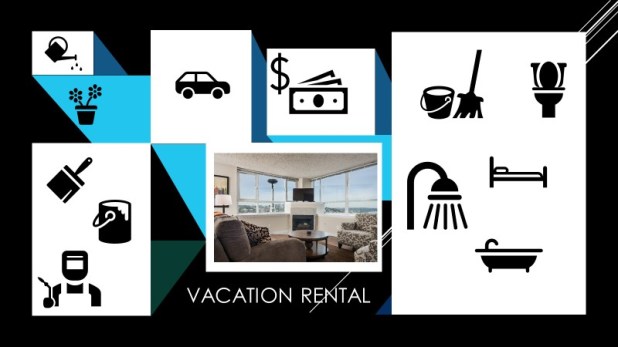
Image Credit, vacation rental, Seattle. Fred Ueckert, FJU Photography [CC BY-SA 4.0 (https://creativecommons.org/licenses/by-sa/4.0)%5D

Vacation Rental Investment Property: Income

Summer is here and our heads are full of vacation plans. Some of us rent summer vacation homes to stay in and some of us rent vacation homes out to others for income.

As a real estate investor, you may be considering buying a property to rent out for income or to remodel and resell. There are four points about income taxes that apply to rental properties that you should know about.

1.  If you rent the dwelling for fewer than 15 days a year, you do not have to report any of the rental income and cannot deduct any expenses as rental expenses.

2. If you receive income from renting property for use as a dwelling, such as a house or apartment, you will most likely need to report the income, and you may be able to deduct certain expenses.

3. The accounting method you choose to follow determines when you count income and deduct expenses.

4. Whether you use the property personally for vacations with your family and friends makes a big difference.

Accounting Method:

The accounting method you use determines when you claim income and deductible expenses.

Types of Rental Income:

Monthly rent is only one kind of income you may receive.  You may also receive rent in advance. You report monthly rent when you receive it. A tenant may pay you to cancel a lease. This income you report when you receive it. A tenant may pay some the expenses attributed to the rental dwelling (for example utilities). You declare the expenses paid as income. You can then deduct the expense if they are deductible rental expenses. A tenant may pay you with services (for example painting) or property (for example they construct a built-in grill). In this case you report the fair market value of the service or property as rental income.

Security deposits are not included in your income if you intend to return them to your tenant at the end of the lease. But, if you keep part or all of the deposit, include it as rental income in the year you receive it.  If a security deposit is used as the final month’s rent, include it as advanced rental income when you receive it.

Personal Use

According to the IRS, If you use the property for personal use 10% of the time or 14 days a year (whichever is greater) and rent it out at the fair market value for income, limitations apply on the rental expenses you can deduct. You will need to divide the expenses between the personal use and the rental income use based on the number of days of each. Of course for personal use, you will not receive income so there is nothing to report on the personal taxes. When you use the property for both personal and rental use, you will not be able to deduct rental expenses in excess of the gross rental income minus the rental portion of the mortgage interest, reals estate taxes, casualty losses from federally declared disasters for the rented part, realtor’s fees, and advertising costs.

One thing to note about personal use is that if you rent to a relative or friend for a token amount, less than the fair market value of a dwelling just like yours, you have to count this use as personal use, not as investment rental income use.

I have a long-term rental loan program that can provide funds for your real estate investment for the purpose of renting for income.

REI Capital Resources is a direct lender as well as a broker of funding solutions. We offer short and long-term financing options.

Please give me a call when you find that perfect real estate investment and know how much money you need.

Patrick St.Cin
512-213-2271
Patrick@REICapital.cash 

References

IRS Publication 527 (2018) Residential Rental Property

IRS Tax topic 415 Renting Residential and Vacation Property

Vacation rental Image in Florida. Jan Lieberman [CC BY-SA 3.0 (https://creativecommons.org/licenses/by-sa/3.0)%5D