Finding Houses to Buy and Owners to Sell — Strategy #1

When you are looking for properties to buy and owners that are ready to sell, there is nothing like getting in the car and driving around your town to see what is really there. Even with all the real estate marketing sites on the internet, when it comes to finding homes you might want to fix up and resell for a profit, you need to be your own detective and look for deals that might not be on the websites. It could be the owners are not internet savvy or the properties themselves are too droopy to lend themselves to pictures and video marketing.—

Driving for Dollars

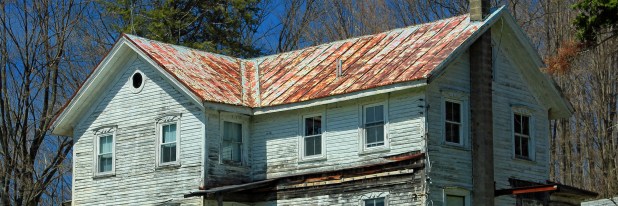
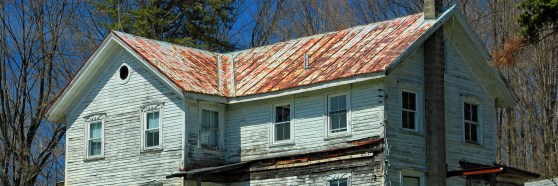
Start by driving through nearby neighborhoods and mobile home parks. Look for vacant, run-down housing or vacant apartment units. Look for un-mown lawns, mail and newspapers piling up, closed curtains, un-watered grass, siding and trim that needs paint, as well as roofs in bad repair. If you are interested in commercial real estate, you can also look for retail and business space that looks like it has not been used for a while. Maybe the blinds are cracked, there is a tarp over the front door, and the windows never have any light in them.

Fixer-Upper_(8676229431)

FOR SALE—For LEASE

“For Sale By Owner” signs are also something to watch for. These are signs that the owner may not be taping into the web market. “For Rent” and “For Lease” signs may also be pointing to owners that really wanted to sell but couldn’t find a buyer. Look for estate sales signs and yard sale signs. Sometimes owners start clearing out their stuff because they are getting ready to sell. At the sale, ask the home owner if they will be selling soon.

Knock On the Door

When you find a home that looks promising, knock on the door. Knock on the neighbor’s door too. If no one answers, ask about what is going on with the property. Leave behind your business card. Write down the addresses and research the property from your computer. Keep a journal of prospects and follow up every month. You can keep an online journal too, photographing the house and making notes to help you remember to follow up.

In the case of commercial business space, the same strategy would apply. Try the door. Knock. Talk to the owners of nearby businesses and find out who owns the building and if they have shared their plans.

One tool that you can make for yourself is a door hangar. It can be something simple that you make yourself with a hole punch and rubber band, or something you more polished that you order form an online printer. It should say something like, “We buy houses. Call 512-555-1212.” If no one answers when you knock, leave one of your door hangars.

If you find a deal, give me a call for a fix-n-flip rehabilitation loan. You can e-mail too.

Pat St. Cin

Patrick@InvestorsLendingSource.com

512-213-2271

Austin, Texas


Jobs = Confidence

U.S. Stocks Rallied again yesterday as corporate earnings and a good jobs report strengthened our confidence in investing. According to Investopedia, “The Market Sum,” by Caleb Silver, “We are six weeks deep into a stock market rally, the likes of which we haven’t seen since 1987.”

U.S. employers added an average of 223,000 jobs per month in 2018, much higher than the 170,000 per month predicted. 248,000 of those jobs were in the manufacturing sector, putting a dent in the 1.2 million manufacturing jobs wiped out in the last recession (Investopedia.com).

U.S. Occupations

If you want to know what type of jobs are in the U.S. labor market, you need to look at both the occupation (worker) and the industry (employer). You can use occupational employment statistics (OES) (published by the US Department of Labor at https://www.bls.gov/oes/) to compare occupations. You can see employment levels and wages for occupations where you live or in the type of business where you work.

According to the OES for the nation, retail sales person is the largest occupation. Next is food preparation and serving persons; then cashiers, office clerks, registered nurses, customer service representatives, laborers and freight movers, waitresses and waiters, secretaries, and general operations managers. These are the top ten occupations in the country. Manufacturing is not there — yet.

Loan Officer in Texas

You can look up “Loan Officer” though, and there are 307,240 loan officers making a mean hourly wage of $37.00 an hour, and interestingly enough, Texas has the second highest number of working loan officers (20, 810), second to California (39,520), with a mean annual income of $86,460.

Strangely, the top paying metropolitan area in the country for this occupation is Laredo, Texas, with a mean annual salary of $131,200. They don’t say how many loan officers there are in Laredo making this salary though. Lubbock, Texas is in seventh place on the top ten, with 260 loan officers, making a mean annual salary of $117,500 each. Number eight is Victoria, Texas, with 70 loan officers making a mean annual salary of $114,230 each.

So What? I think this means that Texas has a lot of money to lend.

Real Estate Brokers

What do the statistics say about “Real Estate Brokers?” First, there are 36,410 real estate brokers working in real estate in the U.S., with others working in management, building construction, credit, and business and professional organizations. Texas is fifth, with 2,290 workers employed in this occupation, compared to California with 5,570. In Texas, Dallas-Plano-Irving is the Texas metropolitan area on the list of areas with the highest employment level in real estate brokering, 830 brokers with a mean annual salary of $80,410.

Cowboys

Sad as it may sound, the song is right. “Mothers, don’t let your sons grow up to be cowboys.” I could find hunters and trappers on the list of occupations, but no cowboys. That cannot be right. This is Texas!

An occupation gives us purpose and confidence. Work is good.

I am a real estate broker. I work with people, land, homes, and money. I, myself, only see the back end of a cow when I visit Kansas. What could get better than that.

cowboy_hats.jpg

If you or your partner have a real estate purchase you would like to make or money you would like to invest in a real estate project, don’t forget, I’m on the net, in the book, and this is what I love to do.

Pat St. Cin

Patrick@InvestorsLendingSource.com

512-213-2271

Austin, Texas


References:

The Market Sum, by Caleb Silver at Investopedia.com

US Department of Labor at https://www.bls.gov/oes/

Cowboy hats. Nika Vee, Austin [CC BY 2.0 (https://creativecommons.org/licenses/by/2.0)%5D, via Wikimedia Commons


It’s Real: Multi-Family Property Investing

As the stock market quivers and stock market investors peer into the fog of the future trying to see where stocks, the economy, and earnings are going, up, down, or sidewise, real estate stands firm, on a block, in a neighborhood, around the corner from this or that, providing shelter to human beings. It might be old or new, trendy or dilapidated, occupied or abandoned, but it is real and panics are not going to move it, even if fire, earthquake, wind, or water might. Housing is still a basic need and if an investment fills a basic need, it is a safer investment.

An investment is not safe though if you do not do your research and match the facts of the property and area situation with your needs, expectations, and goals. When considering investing in multi-family properties, be sure to pay close attention to the quality of property management and to the location. This might be a good time to refresh your memory on investor shorthand for communicating with each other on property types. It really kind of easy, like: A, B, C, and D.

The letter grades are assigned based on property characteristics like, age, tenant income level, growth areas, appreciation, amenities, and rental rates according to ApartmentVestors.com. The grade isn’t there to scare you away from a certain property because it receives a low grade. (Although D areas in dangerous neighborhoods are not investments to be taken lightly or by beginners.) The property grade is there to help you set realistic goals for your investment and to communicate within the industry about what you are looking for.

Multi – Family Property Class A. Class A properties are newer, built in the last 15 years and have the most amenities, lowest vacancies, demand highest rents, and have less maintenance costs. These properties are above average in terms of design, construction, and finish; the tenants make above-average incomes, they are in desirable locations and they are accessible. These apartments are professionally managed by national or large regional management companies.

Investment sense: These buildings have the most appreciation potential but less cash flow starting out. Professionally managed and in desirable areas.

Multi – Family Property Class B

Class B properties were built in the last 15 to 30 years and have some amenities. The rents are average, a bit lower than Class A buildings. Tenants are usually a mix of corporate workers and skilled trades people. These apartments are in desirable places but do not have the design and finish reflective of the latest standards and preferences. The construction is adequate, and the buildings are generally well maintained by national or regional management companies; unit sizes are usually larger than current standards. These buildings have some appreciation potential and decent cash flow rates.

Investment sense: These buildings have the good appreciation potential and more cash flow than Class A. Professionally managed and in desirable areas.

Multi – Family Property Class C

Class C properties are older, built more than 30 years ago. They have fewer amenities, if any. The tenants are mostly service employees and you might have some government-subsidized tenants. Rents are below average, lower than Class B rents, and the occupancy rate is lower. These apartments provide functional housing, exhibit some level of deferred maintenance, are usually located in less desirable areas, and are generally managed by smaller, local property management companies and private investment groups. Cash flow is high, but appreciation is much lower than Class A or B apartments.

Investment sense: These buildings have the little appreciation potential, but cash flow is high. Property management varies because it is local and performed by smaller companies. It might be great, quirky, or terrible. Be sure to check. The location is less desirable but still safe.

Multi – Family Property Class D

Class D apartments are in challenging neighborhoods and potentially dangerous areas. They are older buildings, with no amenities, and high deferred maintenance. The tenants can be challenging, and management is intensive. Cash flow is reduced by lack of payment by tenants and repairs.

Investment sense: These buildings have no appreciation potential and cash flow is reduced. Property management varies because it is local and performed by smaller companies or it might not be performed at all. Be sure to look around carefully. The location could be dangerous, and it might be hard to attract tenants to the area.

Property and Area

When you are looking at buildings and the areas they are built in, apartmentvestors.com recommends that you pick a property in an area that has a higher class rating than the property. The area classes, like the property classes are A, B, C, and D. With A being a growth area, B being an older stable area, C being an older declining area, and D being older and declining, potentially rapidly declining area.

Apartmentvestors.com offers a strategy that suggests it is better to pick a D house in an A area because the area will have more influence over the stability of your investment over time. I would call this the domain of the fix-n-flip investor. As the deep urban areas or warehouse districts become more appealing to working professionals, a building that was once a C property in a D area might become a D property in an A area and be well worth renovating. But you need to be sure the area classification is really changing.

If you are a hands-off straightforward investor, not a fix-n-flipper, you might want to look only at the A and B properties in the A and B areas if you are taking a long-term approach and interested in appreciation in value. However, you might be more interested in cash flow. Then you might want to look at B and C properties in B, or C areas.

That is a lot of alphabet flying around.

If you have a multi-family property in mind and are ready to start negotiating or are ready to buy, send me an e-mail or give me a call and I can help the funding.

Pat St. Cin

Patrick@InvestorsLendingSource.com

512-213-2271

Austin, Texas


References: apartmentvestors.com

A Town with a Trail

Fort Worth

A good real estate property hunter follows the flow of people. And, like the birds that love the water, people too are flocking to the rivers and bayous of Texas. As they follow the new jobs and other opportunities opening up in Texas, they are especially drawn to the waterways and trails that offer walking, biking, boating, and horseback riding. I think of trails as places of freedom, where one can move about, rehabilitate, breathe fresh air, see new things, and even talk with a cousin as you walk along.

Young professionals and families who have lived in the really big cities like New York and Los Angeles are seeing Texas trail towns as good places to call home. According to an article in the wsj by Alina Dizik, they are buying homes in Fort Worth to get better prices on larger luxury homes, walkable neighborhoods, and a yard for their dog. In Fort Worth, they also can get access to the Trinity River Trail and proximity to the city’s cultural district if they so choose.

nashua_river_rail_trail_3

The Trinity Trails System

The Trinity Trails are a system of trails along or near the Trinity River in Fort Worth. There are over 40 miles of trails along the river and its tributaries. The trail network connects with 21 parks, the Fort Worth Botanical Garden, The Japanese Garden, Log Cabin Village, the Fort Worth Zoo, the historic Stockyards, and downtown. You could disappear for a whole weekend on that trail and never be bored.

The Trinity Trail also offers 17 trailheads for picnics and rest stops, five boat launches for canoes, kayaks, and sculls, a water-ski slalom course and fishing in a number of spots. For a map of the trail, visit

http://www.trwd.com/wp-content/uploads/trinity-river-trail-map.pdf

Fruitful Hunting

You might want to consider looking for flip-n-fix properties in the areas along this trail. Although the Wall Street Journal article was talking mostly about luxury homes, it did mention a rehab that the owner undertook themselves. Your hunt for the perfect, or at least interesting and profitable, fix-n-flip property might bear fruit in this area.

If you find a deal, give me a call for a quick gap loan to secure the property or for a full fix-n-flip rehabilitation loan. You can e-mail too. I can help with loans in the DFW metro area.

Pat St. Cin

Patrick@InvestorsLendingSource.com

512-213-2271

Austin, Texas

References:

Dizik, A. As Homebuyers Flock in, Fort Worth Embraces its Cowtown Reputation. WSJ, January 17, 2019.

Nashua River Rail Trail 3 photo by Photo by White, Michael A. at English Wikipedia [Public domain], from Wikimedia Commons.

A Tangible Asset

A tangible asset is one that is capable of being appraised at a particular value. It can be touched. It can be identified. It is real. There is no guesswork about it. Hard money loans are based on the value of the asset or property used for collateral.

The stock market is impossible to control. If you read Investopedia or the Wall Street Journal, you know already that It will soar and dive and stall. However, it is just one option for an investment. Real estate is another choice you can make. Real estate would put some diversity into your investment portfolio. However, it takes a little more hands-on work and patience. In the stock market, all you do is decide how much you want to invest and put your money down and sell when you are ready.

In real estate, you have more choices to make. You decide how much time you want to invest as well as how much money. You should of course do the research upfront yourself and find a great real estate agent to work with, but you can choose the location of the property, pick the quality of the house or apartment complex, do the remodel yourself if you have the skills, find the occupants for a rental through internet advertising, and/or manage the rental yourself by collecting rents and providing landlord services.

A rental produces cash flow even in an economic downturn. In fact, in economic downturns, it might give you more income as people may have to rent instead of buy and occupancy rises. A rental property also builds equity. On the other hand, real estate takes longer to sell than stock and income requires occupants. There are also taxes, insurance, and utilities to pay whether the property is occupied or not.

If you are looking at buying real estate as an investment option, to add diversity to your basket of investment eggs, you need to do your due diligence assessments and be ready for competition. It would be a good idea to get prequalified for a loan so you can have the money on hand fast if you find a property you want to invest in.


img_00003745

Ask yourself:

How much money do I need?

How much collateral can I offer a lender?

How much will the repairs cost?

How long will the repairs take?

Add a 15 % cushion

As a broker, I would be happy to talk over the options with you and can help you find a funding source for a fee. I give advice, do the paperwork, and make the phones calls involved in the transaction. I have contacts and experience in bringing lenders and borrowers together. I’ll help you find the best rates and pass the completed loan package on the lender.

I would love to give you a hand.

Follow this link for a quick prequalification form:

http://investorslendingsource.com/pre-qualification-program

Or, please call or e-mail.

Pat St. Cin

Patrick@InvestorsLendingSource.com

512-213-2271

Austin, Texas

BE AWARE: Part 1

When making a commercial real estate transaction, whether as buyer, borrower, or lender, you really need to do your research into the property’s current and past uses and potential environmental issues. Remember hard money loans are offered based on the value of the property. So, you want to look carefully at anything that affects the property value now and in the future.

This type of look around and document is called a “due diligence” assessment. As the purchaser or mortgage holder, you want to compile information and investigate the property you are interested in buying to make sure you are aware of any issues with the property that will affect your financial outcome. And, you want to do this before you buy.

Just as you would look for issues with the property’s title, such as judgments and liens, on the financial side; and on behalf of your future renters and buyers, check out the safety of the neighborhood at night; and again on their behalf, inspect the road for gargantuan pot holes that might eat their Prias or VWs; you also want to look at the property itself and at its current and past uses for your own sake to make sure you are not inheriting any costly environmental issues that you are not prepared for.

Cleanup Will Cost You

Environmental contamination, such as asbestos, PCB’s, radon, leaking underground storage tanks, mold, mildew, and lead-based paints on a property can cause the cost of “fixing” the property to explode so you want to be aware of these situations and prepare for them or walk away.

The official name for the investigation into environmental hazards and liabilities on a site is called a phase I environmental assessment. It determines in a methodical way if there is any environmental contamination or hazards in a building’s region or within the building itself. There are many professional firms out there that do this kind of work and one may have already been done on the property you are thinking about.

Get the History

The environmental site assessment typically addresses the history and current conditions of both the underlying land as well as physical improvements to the property. This assessment would scrutinize the land for soil contamination, the groundwater and surface water for contamination and quality.

It would look at the structure or structures on the property you are buying. Are there abandoned drums of unknown liquids or materials, an unlicensed dumping ground in the woods in back of the house, contaminated water wells nearby, or chemical residues, asbestos, mold, mildew, or other hazardous substances in the basement?

asbestos_fibres.jpg

Abestos (tremolite) silky fibers, photo taken at the Natural History Museum in London by Aram Dulyan, public domain, Wikimedia commons.

Neighboring Properties

The phase I environmental assessment would also evaluate if there are contamination risks on neighboring properties that might affect the value of the property you want to buy. Before you invest in the formal environmental assessment, you might want to do a little sleuthing yourself to see if you want to invest even that far  You can start by performing some visual inspections and record searches yourself.

Walk around the neighborhood and take notes on what is nearby, within a half mile or a mile. Are there hazards or attractions in the vicinity?

Review Federal, State, Local, and Tribal records of the property using its GPS coordinates and review the records for properties up to a mile away.

Interview people who are knowledgeable about the property, for example, past owners, current owners, managers, tenants, neighbors.

Fires, Floods, Mud, and Spills

Examine municipal or county planning files to check for prior usage and permits granted and conduct file searches with public agencies, such as the fire department, state water board, county health department. Ask yourself, has a previous building on the site burned down? Why?

Examine historical and aerial photos for previous and current structures in the vicinity, like an old rail yard, military base, or gas station. It is a good idea and sometimes even fun to look at photos back to a time when there was only bare ground at the site.

txlakeconroemap-e1546539800547.jpg

USGS Topo of Lake Conroe, Tx and vicinity, public domain, Enter a caption

debris_flow_deposit_ladakh_nw_indian_himalaya_2-e1546539957481.jpg

Debris flow in Ladakl, India photo by Dan Hobley, Wikimedia commons.

Examine USGS maps and look at the drainage patterns and topography. We have seen enough in the news lately to make us aware of the dangers of floods, mudslides, fires, and hurricanes.

Where one of these has occurred, it is likely that another will follow sometime down the road. Ask yourself, has this property been flooded before or does it lie in a floodplain or an arroyo?

SBA and HUD

If you are considering lending money on a property, you might want to take into consideration the requirements of the US Small Business Administration’s 504 Fixed Asset Financing Program. It requires specific and often higher due diligence requirements than regular real estate transactions. These assessments are required for certain NAICS codes that associated with the prior business use of the property. There are 58 specific NAICS codes that require Phase I Investigations. These include, but are not limited to: funeral homes, dry cleaners, and gas stations. According to Wikipedia, “The SBA also requires a Phase II Environmental Site Assessment to be performed on any gas station that has been in operation for more than 5 years. The additional cost to perform this assessment cannot be included in the amount requested in the loan and adds significant costs to the borrower.”

The US Department of Housing and Urban Development also requires a Phase I ESA for any condominium under construction that wishes to offer an FHA insured loan to potential buyers.

Remediate or Remodel?

All of this detail is indeed not meant to scare you away from buying real estate to remodel and resell or to remodel and rent. It is only meant to make you aware. It is trendy and even admirable to consider buying old junked up industrial property down by the river or in the mining district and turning it into polished urban housing or shopping pavilions.  If you have ambitions in this area, be sure to look around carefully, do your research, know your costs, and have money ready to remediate the site for you are probably looking at more than a quick remodel.

Disclaimer: I am not providing environmental advice or investment advice.

Patrick@InvestorsLendingSource.com

512-213-2271

Austin, Texas

2019: The Year of the Learner

I just read an interesting blog called the “Future of Learning” off the Medium blog site by Niklas Göke.

The point of his essay is that learning itself is a skill and the person who can learn how to learn will be “exactly the person an unpredictable world needs.”

He and Emilie Wapnick both suggest that if you can learn to learn across multiple domains, you can then specialize faster when you choose to do so or remain a generalist, standing out against the world of specialists.  So what do they advise?

Don’t change if you are a generalist, don’t narrow your focus to get ahead in your career.

Challenge yourself to grasp concepts of broad variety, like microbiology, auto repair, knitting, and aerospace.

Learn the difference between what is important and what is unimportant and combine many bits of information into a broad picture of the world. (Yuval Noah Harari)

What will the skill of learning get you? Well, if the knowledge you learn in a university education only lasts 5 years and companies rise and fall all around us very quickly, learning to learn will help you become what Emilie Wapnick calls a “Multipotentialite.” These are people who can synthesize ideas, innovate, rapidly learn, stay flexible, stand out from the specialists, and be adaptable.

In an unpredictable world with many complex problems and to much information, being a person who can be receptive to multiple perspectives and hold them in your head all at once, keep an open mind, one that allows new information in and allows the picture of reality to evolve and become coherent will be very valuable in the future.

So in 2019, Let’s all vow to be learners. Keep an open mind, build a real picture in your mind, and invest in it.

books on bookshelves

Photo by Mikes Photos on Pexels.com

Patrick@InvestorsLendingSource.com

512-213-2271

Austin, Texas


Downtown by the River

If you watch much of the show “Buying Alaska,” you will be very familiar with the phrase, “It has a view.” In Alaska, it is all about mountains, glaciers, and sometimes a lake, but in many cities the desired view involves an urban river. According to an article in the Wall Street Journal, “The Latest Housing Hotspot Is Downtown and by the River.” I think that San Antonio already knows this.

“Urban Energy and Natural Beauty”

Ceclie Rohwedder, (WSJ, December 6, 2018) writes about couples in Minneapolis, Washington DC, and Omaha trading in their country homes for homes in remodeled power plants and other industrial buildings in downtown areas along urban rivers, buildings that have been turned into modern condos. What does their new home offer, she asks? “Urban energy and natural beauty” one couple says.

I must agree. Watching a river is like watching a fire, its mesmerizing. But it is interesting and beautiful too with boats, birds, and fishermen. And those old buildings left over after industry has moved on, I have often looked at them, the old brick warehouses and mills that sit along the elevated freeways of our cities, the ones with the fading billboards high up on one corner, and vacant windows. What is the architecture like, I’d wonder? They look so sturdy. They are not going to come down soon, but who is going to use them.

Americans Just want to Live Downtown

Well the city planners, developers, and investors are way ahead of me. They are turning these behemoths into housing with a view, housing near culture and sports arenas, and water. Young professionals and retirees alike, it seems, crave community and walkability along with a touch of nature. And Americans overall (this year anyway) want to live downtown. An urban riverfront close to downtown offers work, culture, and play.

These are the areas that are drawing people to look at the old and want to make something new out of it. It is the buying and the fixing up of the building that is the investment. But investors are doing this all over the country and people are buying.

So, even if you are not up for buying and remodeling the old paper mill down by the river, when you are looking for a house to buy as a fix-n-flip investment, do not forget to scout around in these riverfront areas of your town. There, in the shadows of the big buildings, might be some smaller projects, homes or shops, more to your liking.

Patrick@InvestorsLendingSource.com

512-213-2271

Austin, Texas
Old_houses_by_the_Agout_River_in_Castres_(2)

Cold Storage 101 or −101°

Looking into the future, where should you put your money or your efforts if you are looking for a commercial real estate project that can offer decent returns. Perhaps you should think about one of the things we Americans, and people and animals everywhere, really need, food.  According to Esther Fung, WSJ, the best performing real estate investment trusts this year are in the area of food storage —cold food storage.

Right now, according to Rick Romano, head of PGIM’s global real estate securities, “cold storage is about as defensive an investment strategy as it gets.” American Realty Trust, the only publicly traded cold storage real estate investment trust, has risen 50% since the start of the year.

He also says that only 2% of groceries are bought online, but as people work longer hours and avoid long commutes and extra trips to the grocery store, that number could rise.  If it goes up to 5% or 10%, he suggests, there will be a continued demand for cold storage facilities in densely populated urban areas.

Cost of Building or Remodeling for Cold Storage

Cold storage might be a very good investment for an investor interested in commercial real estate construction or a commercial fix-and-flip project.

I know there are cold storage facilities operating near me, near the train warehouse area, because I have a friend who went to work there and in a cold storage facility, even the office space is a cool 40°.

According to Joshua Everage at A-N-C- cold storage, investment management firm JLL says the “cost of building a new cold storage facility is $150 to $170 per square foot, compared to $50 to $60 dollars a square foot for regular warehouse construction.  Most cold storage facilities are new builds, but you can expand or upgrade existing warehouse space at a cost of $60.00 to $70.00 a square foot. That is about 40% of the cost of building a new facility from the ground up. ”

−Everage also says that when you are looking at costs, consider the usual items, like location, but also the unique requirements of a cold storage facility, the freezing equipment.  Do you need a unit that can flash freeze product like fish, or a chiller? There is a difference in cost.  Also consider the height of the docks, the height of the building itself, exterior and interior wall finishes, and plumbing requirements. For a free cold storage construction guide, visit http://www.anccold.com/blog/cold-storage-construction-cost and download a guide.

For help coming up with a lender or someone willing to tackle the project, call me. I’m based in Austin, but I can meet you where you are at, in Dallas, Houston, or San Antonio.

Patrick@InvestorsLendingSource.com

512-213-2271

Austin, Texas

References:

Everage, J. 2017. Cold Storage Construction Cost Per Square Foot. Blog, at http://www.anccold.com/blog

Fung, E. WSJ, December 2018, Real-Estate Stocks Beating S&P 500 for First Time Since 2015. https://www.wsj.com/articles/real-estate-stocks-beating-s-p-500-for-first-time-since-2015-11545134402


A Job: Still A Good Investment

The U. S. Bureau of Labor Statistics offers projections that can help you choose where to focus your education and experience if you are looking for a job during the decade 2016 to 2026. Although fast growing, the two top growing careers on the list (Solar photovoltaic installers &

Wind turbine service technicians) are pretty specialized, so there are not a lot of people in these jobs. However, according to the Bureau of Labor, the number of jobs in the areas of solar and wind power will double by 2016 demonstrating the increased interest in alternative energy.

Five of the top ten fastest growing careers are in health care. This make sense because our population in the US is growing older. As the baby boomer generation (those born between 1946 and 1964) grows older, they will not only leave the work force, but require more health-related services. Some of the careers that projected to grow by 2016 include

Home health aides

Personal care aides

Physicians assistants

Nurse practitioners

Physical Therapist assistants

The other two careers that are fast growing are related to the needs of the science, technology, engineering, and math community are include

Statisticians

Software developers, applications

Mathematicians.

What does all this data mean to you? Well if you are looking for a job, Houston is a good place to look and if you are looking for a particular type of job your outlook for finding a job is good if you are looking in the top ten fastest growing occupations.

I read once in a book on money, that the best investment is “a good job.”

Patrick@InvestorsLendingSource.com

512-213-2271

Austin, Texas

medic treating patient

Photo by rawpixel.com on Pexels.com

New metropolitan area employment data for November 2018 are scheduled to be released on Friday, December 21, 2018 at 10:00 am (ET)

U.S. Department of Labor, 2018