Bridge that Gap

Sometimes there is a gap that needs to be crossed or bridged temporarily between money going out for a new purchase and money coming in from a home sale. The bridge loan is the funding tool that applies in this multiple house situation.

toon-3111

REI Capital Resources is a loan originator for select investor single-family residential projects. Our goal is to provide fast closing loans to fund your investment projects so you don’t lose a good deal.

Enjoy your day!

Patrick St.Cin
512-213-2271
Patrick@REICapital.cash


Cartoon used with permission

A Family of Land Websites to Admire

I recently stumbled onto a family of fascinating websites for those of us who love land.   Whether you are interested in a vacation rental or garlic farming, solar farming or raising timber, hunting quail, or building a deer hunting preserve, this family of sites has much to offer those with land on their minds.

agriculture barn clouds cloudy

The first one I discovered was landflip.com because I was thinking about investing in vacant or rural land.  Land Flip lists the best vacant and rural land available.  So, if you  are looking for hunting land with a cabin, 100 acres in Sierra Blanca, or a poultry farm in Arkansas.  This is the site to visit.  And it is a beautiful site with property descriptions and lots of gorgeous land photos in its galleries.

The sibling in the family is lotflip.com.  Here is the site to go to if you are looking for commercial sites and land. Some of the same properties appeared here as on Landflip.com, like the poultry farm and the land in Sierra Blanca, but they were joined by industrial sites in New Jersey and housing sites in Northern Arizona.

The middle child in the family is farmflip.com, a site that features just what it promises, farms, but with much variety. Here you can find that horse farm in Wyoming, hobby farms, a working cattle ranch in Sabine County Texas, and timber tracts in Florida.

Auctionflip.com is the next site, and it features upcoming auctions, including galleries showcasing fenced land in Kansas, residential development land for auction in Indiana, a home on 15 acres in Platte County, Missouri, and a log home and bed & breakfast lodge with 52+ acres in Houston being auctions on April 27th at 10 am. The property includes a barn, a shop, horse stalls, feed room, chicken coop, dog kennels, and 2 ponds. This could be an interesting investment for the right person.

If your dream involves commerce, hard work, and land, and if you are looking for a piece of urban or rural land to perform on, the not-so-little brother in the family of websites is the one to visit, commercialflip.com.  I think this site had my favorite unique commercial opportunity, a trading post with 34 cabins in Gunnison County, Colorado, right in the heart of the Rocky Mountains. As a kid, I always dreamed of my family owning a trading post of bar in the mountains.  This would have been the place.  The site also featured a gallery of other commercial opportunities, like a Lake Michigan vacation home, a river ranch with cabins in Missouri,  and a family restaurant and motel in Michigan.

Finally, the daddy and the mommy site of the family, as far as I am concerned, where you can learn all about land is landthink.com This is where the blogs, articles, facts, and opinions live.  Here you find information to use and admire about topics like

  • the unique gourmet crops that will make money for a farm,
  • when to get into debt for land and when not to,
  • how to get a timber appraisal,
  • how to organize a community garden, and
  • how to clear land.

I am not sure but this might be my last post. I am off to plant garlic and willow trees.

Not really. But, I do recommend studying these websites for information and possible deals for your next investment, maybe a vacation rental.

Give me a call or send an e-mail and share with me your plans and needs, and I’ll see what lending solution I can generate for you.

Patrick St.Cin
W – 512-213-2271
Patrick@REICapital.cash
Info@REICapital.cash


Commercial Real Estate

Most of our fix-n-flip projects have involved residential real estate, but commercial property can also be bought and renovated as an investment with our lending tools.

The commercial market requires some scrutiny to find the best, less risky, options for your investment.

Commercial real estate is property that is used exclusively for business purposes and property that is leased out to provide a workspace rather than living space. Investopedia

According to the “2019 U. S. Commercial Real Estate Market Outlook,” by CBRE, the outlook is good for all four major commercial real estate asset types: office, retail, industrial, and multifamily and three of our Texas towns, Houston, Fort Worth, and Dallas, are on their chart of the Top-10 Markets for Annual Rent Growth over the next 5 years.

On the other hand, JP Morgan is more cautious and expects more modest growth in the commercial real estate market. In their 2019 Commercial Real Estate Outlook by Alfred Brooks, they point out certain areas that are riskier than others and some that still look like good investments.

Together the two investment experts expect 6 situations to influence the market.

  • Online Consumption of All But Food: As more of today’s shoppers move online, traditional brick and mortar real estate stores and malls will be risky investments, except for traditional grocery stores, which have not yet been affected by online competition. JPMorgan
  • Online Goods Need Storage: While trade wars and possible recession affect the value of industrial property, the expansion of e-commerce creates more demand for industrial buildings that can be repurposed to store and distribute goods sold online. JPMorgan
  • More Jobs than Workers: Strong demand for modern and efficient office spaces with lots of amenities, driven by employers in their effort to keep employees in a competitive labor market will keep this market healthy as long as the spaces themselves and lease structures are flexible. CBRE
  • Upscale versus Modest Housing: Upscale multifamily housing has been overbuilt in many markets, but housing shortages still exist in affordable housing in the Class B and Class C units that cater to renters. This shortage of affordable housing makes more modest multifamily housing an attractive investment. JPMorgan & CBRE
  • Preference for Urban Living: Young people continue to live in the city and are willing to trade square footage to avoid a long commute and live where they work and play. Their preference has kept the multifamily housing market healthy. JP Morgan
  • Interest Rates: What can I say about interest rates other than interest rates affect everything, and the Fed looks like they might be raising interest rates and are unlikely to lower them unless there is a financial crisis. This situation makes this a good time to consider buying commercial real estate so you can lock in a lower rate. JP Morgan

REI Capital Resources is a funding source for large commercial projects such as office buildings, 5-40 door multi-family buildings, and many others. These programs vary wide and far throughout the gamut of lending. Call or e-mail for more information.

apartment apartment building architecture building

Photo by Expect Best on Pexels.com

Patrick St.Cin
W – 512-213-2271
Patrick@REICapital.cash
Info@REICapital.cash

 
References
Brooks, Alred R. JP Morgan 2019 Commercial Real Estate Outlook http://www.jpmorgan.com
https://www.jpmorgan.com/commercial-banking/insights/2019-commercial-real-estate-outlook

Chen, James, Investopedia Commercial Real Estate Definition, April 2019. https://www.investopedia.com/terms/c/commercialrealestate.asp

CBRE, 2019 U.S. Real Estate Market Outlook. https://www.cbre.us/research-and-reports

Thinking Like Your Buyer: The Joneses?

The Neighborhood

As part of your regular routine, before you invest in a house to fix-n-flip, you will be researching the after-repair value, figuring out what price the house will sell for after it is remodeled, and how it fits in with the other houses in the neighborhood. While you are doing this, picture your buyer. Are they young and first-time home buyers? Do they have children? Are they older and downsizing?

If your buyers take the advice of  Investopedia’s “How to Buy Your First Home” a tutorial by Amy Fontinelle, they will want to pick a neighborhood that is a close fit to their own lifestyle so they will feel at home with their neighbors. They can find facts and statistics about a neighborhood’s average income and college educations on websites, forums, and neighborhood message boards, places you will want to look too.

Pressure to Spend
Like professional landscaping and groomed yards, expensive vacations, weekly maid service, landscaping contractors, cosmetic surgery, boats, restaurant-quality kitchen appliances, certain types of vehicles, and country club memberships can put pressure on people who live in neighborhoods that encourage conspicuous consumption. To be frank, will your buyer feel comfortable or will they feel pressure to keep up with Joneses who live next door if they come to live in the neighborhood where your fix-n-flip project is located?

“Stop Keeping Up With The Joneses – They’re Broke.”  Investopedia, (2014)

Lisa Smith, the author of the article, “Stop Keeping Up with The Joneses,” reminds us that spending money for the sake of flaunting your wealth, once something only done by celebrities, has come to suburbia, and to regular neighborhoods all over the world, but not necessarily for the good of their financial or their blood pressure.


white cruise ship on the sea

Photo by GEORGE DESIPRIS on Pexels.com

So, if you are remodeling a modest house, it might be best to find one in a neighborhood that is not extravagant about spending for the sake of the modest buyer who might buy your modest house.  This will speed up your investment turnaround.

It is true that you cannot always pick the house and neighborhood where the greatest deal pops up, but remember, you only get your money out of the house, if you sell it; and, if you are going to invest your money, time, and credit into a house to resell, be sure you can sell it to a real person in as short a time as possible.

Please give me a call when you find that perfect investment in the just-right neighborhood. I am still focused on funding your success and I have more tools than ever to work with.

Patrick St.Cin
512-213-2271
Patrick@REICapital.cash


References

Cruise Ship: Photo by GEORGE DESIPRIS on Pexels.com

Smith, Lisa, Stop Keepng Up With The Joneses – They’re Broke , Investopedia 

Fontinelle, Amy, How to Buy Your First Home: A Step-By-Step tutorial, Investopedia

In the Path of a Storm

Alert: Harvey, Irma, Rita, Katrina

Don’t worry, it is not hurricane season yet. However, there are things you need to know now, before the storms approach.

I was just looking at reasons a real-estate investor might lose money on a fix-n-flip project or a vacation rental property deal and stumbled upon natural disasters as a possible cause of investment loss. After reading several articles and searching the real estate websites, I ran into tips for real estate investors facing an approaching natural disaster at yourflipcoach.com, Your Virtual Real Estate Coach. Be sure to visit Ryan’s site if you have a minute.

Insurance Binding
First, as a practical matter, it is very important to know that insurance companies will not bind a new policy or add additional coverage to an existing policy if a hurricane or large storm is headed for Texas. This is important for you to know if you are planning to invest in a property in Texas.

Make sure a hurricane is not on its way. Buy insurance that covers flood and wind damage and replacement costs, and don’t buy the property or the insurance if you can’t bind an insurance policy. Both you and your lender will want insurance on the property. Buy flood and wind insurance on your new property and make sure insurance binders are active well before the next storm.

Closings Disrupted
Second, when you have found a buyer and a storm is approaching, time the closing of the deal so that closing is complete well before the storm event. The storm can get in the way of your closing in so many ways. Following a storm, roads and properties may be damaged and inaccessible. Even if you are dry, routes in and out of your area might be blocked or flooded. You could lose your buyer because they cannot get to you or to the property, or because the property is damaged.

A study performed by the Federal Reserve Bank of Dallas concludes that the “typical hurricane raises real house prices and, to a lesser extent, reduces real incomes for a few years.”

New Business Opportunity 5 Years Out
Third, be ready for new business opportunities following a storm. Damaging natural disasters and the insurance money that comes into the market after they pass can create new opportunities for real estate investors. Some property owners may want to sell, particularly if they did not have insurance. Even if they are insured, many home owners will take their insurance check and sell the property for whatever they can get. Some lots are sold at land value after the home was removed; but once a house is rebuilt, it can be resold again at near the same price in future years (about 5 years).

aerial view atmosphere clouds cold front

Residential Prices Rise Because Housing is Needed
The value of property that is high and dry after a hurricane will increase because homes are lost or uninhabitable. Housing will be needed. And, buyers and investors will be seeking solutions.

An article in Forbes by Jordan Lulich points out that right after a storm, home sales go down because property owners are too busy cleaning up. According to his article, two months after Hurricane Harvey, 31% of residential neighborhoods saw an increase in median house prices here in Texas.

It is still smart to invest in real estate in hurricane prone areas because residential property values increase over time. Repair costs associated with storms are certainly worrisome. Just be sure to buy insurance that covers wind and water damage to protect your asset.

Please give me a call when you find that perfect investment, and I can help you fund the project.

Patrick St.Cin
512-213-2271
Patrick@REICapital.cash


References
Ryan Kuhlman, January 8, 2018, Natural Disasters and Real Estate Investing, https://yourflipcoach.com/natural-disasters-and-real-estate-investing/

Jordan Lulich, June 28, 2018, Does Hurricane Damage Negatively Impact Your Real Estate Value/
Forbes https://www.forbes.com/sites/jordanlulich/2018/06/25/does-hurricane-damage-negatively-impact-your-real-estate-value/#381ca6d5107b

Murphy, Anthony and Stroble, Eric, October 2010, The Impact of Hurricanes on Housing Prices: Evidence from US Coastal Cities. Federal Reserve Bank of Dallas, Research Department, Working Paper 1009, https://www.dallasfed.org/


Taxes: Buy/Flip or Buy/Hold

There is no way around it, when you consider investing in real estate, or anything else for that matter, you need to do your homework to keep your investment safe and avoid surprises.

First, spend time with yourself to define your goals and then, spend time with the math to estimate the costs carefully before you invest. Everything costs something, but somethings are worth the cost.

First your goals: Ask Yourself:

“Do I want to get my hands dirty?”
“How involved do I want to be?”
“Do I want a single pay out of profit”
“Do I want a steady stream of income?

The buy-n-flip model of buying a distressed house at a low price, renovating it, and reselling it for a profit within 12 months is usually pretty hands on. If you don’t actually do the remodeling yourself, you will be supervising your contractors, so you get quality work, on time, and within budget. The Fix-n-Flip model will give you a one-time pay out, and if you did your preliminary market research properly, it will give it to you quickly, in less than a year.

The buy-and-hold model of buying houses, fixing them up or not, and renting them out will give you steady income. In this model, an investor can choose to rent the property out or occupy the property. There are varying levels of involvement for the investor to consider. Landlords are investors who own one to three properties and manage them themselves. This is the hands-on level. Portfolio Investors own four to ten rental properties and hire property management companies to manage them. This level of involvement is less hands on. Turnkey investors are the least involved personally with their investment, they purchase a property that already has a tenant and management company in place. Basically, only their money is involved.

Different Taxes

One of the cost differences between investing in fix-n-flipping and investing in fix-n-holding is the income taxes that you will have to pay on the profits. According to FitSmallBusiness.com, flipping houses is generally not considered passive investing by the IRS. Most real estate fix-n-flippers are considered dealers by the IRS. A real estate dealer is defined as someone who purchases real estate and sells it to customers “in the ordinary course of business.”

Ordinary Income. Profits on flipped houses are treated as ordinary income with tax rates between 10% and 37%. The profits you make are not considered capital gains with the lower tax rate of 0% to 20%. Taxes for flipping also usually include self-employment tax, which is 15.3%, double what you typically pay as a W2 employee.

Capital Gains. On the other hand, according to FitSmallBusiness.com, profits made from properties held more than 12 months are typically subject to more favorable long-term capital gain tax rates ranging from 0% to 20%. This profit is also subject to self-employment tax .

Keep Your Receipts

The answer to handling the tax expense for a fix-n-flipper or the fix-n-holder is to think like a business; budget for the taxes in your expense calculations and take them out of your expected profits so the return you expect is realistic. And, keep excellent books. You will want to itemize your deductions and income in either type of investment so when it comes time to calculate your profit for tax purposes, you can determine your profit by subtracting your expenses from the final sales price. Keep your receipts. If you keep no records, you might have to pay taxes on the entire amount of the sale, not just on the profit.

white graphing paper

REI Capital Resources is a direct lender as well as a broker of funding solutions. We offer short and long-term financing options that are perfect for buy-n-flip projects or buy-n-hold projects.

Please give me a call when you have the perfect investment in mind and know how much money you need.

Patrick St.Cin
512-213-2271
Patrick@REICapital.cash

Thinking Like Your Buyer: Restrictions

As a real estate investor, contemplating houses to buy and remodel, or to fix-n-flip, you need to think like the house buyer you hope to sell to. It is important to do this before you buy an investment property to protect your profits from withering away while the house languishes on the market. Of course, deals come when and where deals come, and you often have to move quickly to snap up the bargain. Under this pressure, it a very good idea to take a breath and research the neighborhood before you commit.

I was actually thinking about real estate sales and roads when I found this tutorial on buying your first home in the online journal Investopedia.com.  But Amy Fontinelle’s tutorial caught my attention with her discussion on neighborhood associations and deed restrictions. The tutorial offers first-time buyers a sensible and interesting mix of things to look at when purchasing a house. As real estate investors planning to buy houses to resell, you need to think like your buyer too.

Neighborhoods Have Rules: Some are Written Down

First, she tells first-time home buyers that different neighborhoods have different characteristics and that you want to pick one that is “the closest fit to your lifestyle and personality.” One of the items she recommends first-time buyers think about is whether there are restrictive covenants in the neighborhood. I hope as I write this that you will not be able to tell whether I am a free-wheeling renegade or a neatnik appreciative of boundaries and rules. Here goes.

Neighborhood associations can be a friend or a nemesis to your buyer. They can impose maintenance requirements on the home owner or forbid certain adornments. As Ms. Fontinelle says, “You might not be able to leave trash cans out past a certain hour on trash day, paint your house blue, or let your grass grow too tall.”

Get the Whole Story

Facts and statistics about the neighborhood are available on real estate websites, but to get the whole story, you may need to talk to the current residents, walk the neighborhood, and visit local Facebook groups. Once you have found out about the neighborhood, ask yourself, who do I think is going to buy this house I am investing in. You need to use your imagination because your buyer may be very different from yourself and have different tastes. Can you picture them and sell a house to them with genuine enthusiasm?

Backyard Chickens and Pit Bulls

When you look at the property you are about to invest in do you picture a buyer who is a bit of an urban farmer who likes freedom and won’t mind a community garden next door and may want to raise backyard chickens, walk a pit bull on a leash, and grow wheat in their front yard?

Are you finding that the neighborhood is so exclusive and restrictive that you are having trouble imagining who would want to live there? As Ms. Fontinelle reminds us, many people appreciate the restrictions and like the tidier appearance that may boost property values.” Others she says, “Find them obnoxious.” Here are a few things to consider:

Are sheds and outbuildings forbidden?

Are you allowed to pasture a cow or a horse?

Are the yards meticulously manicured?

Do the neighbors have extensive gardens?

Is curb appeal a big deal or do the neighbors find the house with a big garden intimidating?

Are pets allowed?

Resales and Loan Request: Why it Matters

As the fix-n-flip investor, these restrictions matter to you in two ways: (1) will you be able to sell the house eventually, and (2) how will these restrictions impact my project’s expenses and loan request?

Let me know if you have found any deals this month that you know you can turn around and resell with enthusiasm. I hope that I can be of help to you this month.

I can be reached at
Patrick@REICapital.cash
512-213-2271
Austin, Texas

References:
Investopedia.com How to Buy Your First Home: A Step-by-Step tutorial. Amy Fontinelle


Thinking Like Your Buyer: Roads

Real Estate and Roads

As a real estate investor, contemplating houses to buy and remodel, or to fix-n-flip, you need to think like the house buyer you hope to sell to eventually. But, you want to do this before you buy an investment property to protect your profits from the fatal sink holes that can literally eat up all of your investment dollars and leave the house you want to sell on the market forever.

Of course, deals come where deals come, and they are not always in the greatest neighborhoods, or at the right time of year, or under ideal conditions.

I was thinking about real estate sales and roads when I found a great tutorial on buying your first home in the online journal Investopedia.com. The tutorial was written by Amy Fontinelle. It offers first-time buyers an interesting mix of things to look at when purchasing a house, they may live in for years.

Ask yourself, who do I think is going to buy this house I am investing in. If you cannot picture anyone, or the bird is so rare you haven’t seen one like it lately, you might want to walk away from the deal.

Picture Your Buyers

When you think about your buyer, do you think of someone who was last seen in a truck that looked like chocolate, mud from roof to wheels, because they like off-road racing?  Even if they do like to race on the dirt hills, do they want to travel over them several weeks of every year to get to work?

Do you think your buyer will likely be a young working professional who will want to arrive at work quickly, with a clean car and a clean coat?

Do you think your buyer drives a car with heavy duty tires that can take the wear and tear of a gravel road?  Will they be driving a 4-wheel drive with high clearance? Or, will they be driving a small vehicle with two-wheel drive and low clearance.

Mud on the Running Boards

No matter who you are picturing, always consider the quality of the roads or your buyer is likely to be in a conversation like the one I heard this week.

“The boss here,” says a man, nodding his head at his wife who is seated at the same table, “is the one who made me pick a house on the black top.”

“Ah, I wish, I had thought that out,” says their friend shrugging into his coat as he signs his bill that is laid out on the table next to them. “Have you seen all those gravel trucks going by lately.”

“I’ve been replacing a lot of wheels lately,” snickers the local car mechanic leaning out of a nearby booth to join in the conversation while his family snacks on nachos before dinner.

As she swings by with a loaded tray, the waitress adds, “I had to back up and leave my car at home today because I could not make it over a washed-out part of the road. I’m glad I did, or I’d be in your repair shop right now.”

“I had to catch a ride with my neighbor who drives a jeep,” she finishes.

Washboards and Potholes

You may not often find yourself in small towns on the edge of  open country, but even in the city, roads are very important and in the Spring the potholes can easily eat axles and wheel rims. Take a good look at the roads yourself and ask yourself, are the ditches and gutters cleaned out, does the water pool on the crown, are there washboards and pot holes that have just been covered with gravel or tar and not cut out. Is the road gravel?

Talk to the neighbors. A good question to ask is “Was the road passable in the Spring?” “In the winter is this hill icy?” “Has anyone you know of ever slid down this driveway into that creek?”

The house buying advisors tell house buyers that they need to pick a neighborhood that is the closest fit to your lifestyle and personality. Their list of things to consider is quite extensive, and it definitely includes the quality of the roads.

Although I just heard about some quirky houses that sold to quirky buyers who thought they were “cool,” I’d say if the house is on 13th street, next to a railroad, a sink hole, and a cemetery, was once owned by a mass murderer, and for sale cheap you want to walk away. Be careful with your money. IMG_00003829
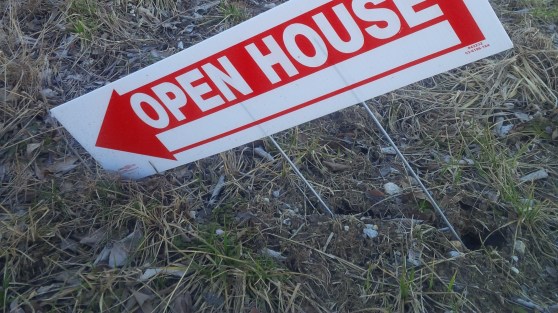
Let me know if you have found any deals this month that you cannot walk away from. I hope that I can be of help to you this month.

I can be reached at
Patrick@REICapital.cash
512-213-2271
Austin, Texas

References:
Investopedia.com How to Buy Your First Home: A Step-by-Step tutorial. Amy Fontinelle

 

Abandonment

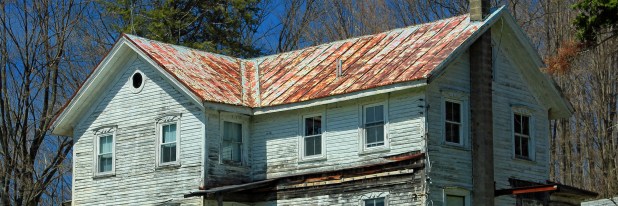
I recently added an Escrow Glossary of Terms to my website. You might want to check it out. The first word is a rather sad one, “abandonment.” Of course, the list is alphabetic. “Abandonment” is an official term in real estate the means the voluntary relinquishment of rights of ownership or another interest (such as an easement) by failure to use the property, coupled with an intent to abandon (give up the interest). This subject is relevant  because in your search for a fix-n-flip project to invest in, you might run into a house that looks abandoned. It may be. It may not be.

Fixer-Upper_(8676229431)

Intention to Abandon

According to the Letter of the Law, volume 13, number 4, 1999, by Judon Fambrough, “an essential element of abandonment is the intention to abandon and such intention must be shown by clear and satisfactory evidence.” Judon goes on to say that non-use and failure to maintain and repair property is not sufficient evidence on its own to prove abandonment.

While title to real property cannot be lost by abandonment, it can be lost in other ways. Land title can be lost by adverse possession when another person possesses and uses the property without permission for a specified time. Real property can also be lost by forced sale when a sheriff sells the property for delinquent taxes, a trustee sells the property for delinquent mortgage payments, or a homeowner’s association sells the property for unpaid assessments.

Adverse Possession

On the LoneStarlandLaw.com website, David J. Willis explains that adverse possession refers to circumstances under which one may lawfully lay claim to ownership of property not originally one’s own. Classic examples include the rancher who fences in an adjoining tract and pastures his cattle there for a decade and the family that gradually takes over the empty lot next door.

According to Willis, foreclosed houses are often perceived to be abandoned because they are sitting idle. These houses are not abandoned and the courts have tended, he says, to protect the interests of the absentee lenders who are now owners.

Facts and the Law

Everything about an adverse possession claim must be based on facts and the law. For one thing, to make a legal claim of adverse possession, you have to have a legal description of the boundaries. The boundaries cannot be uncertain. Paying taxes or back taxes on a property does not guarantee possession either if the original owner shows up, it does however prevent the eventual sale of the property in a tax sale. If a title search reveals an owner of record that can be located, it may be better to contact them and buy their interests.

Willis also says, the law is does not condone or contemplate the use of the adverse possession rules as a business plan for aggressive investors. This strategy is involves breaking the law, for example, breaking and entering, file false instruments, slander of the title, and fraud.

Knock

If you find a house you think is abandon, fall back on my strategies for finding motivated sellers. Knock.

When you find a home that looks abandoned, one that might be up for sale if you can find the owner, knock on the door. Knock on the neighbor’s door too. If no one answers, ask about what is going on with the property. Leave behind your business card. Write down the addresses and research the property from your computer. Write about the house in your journal of prospects and follow up every month. You can keep an online journal too, photographing the house and making notes to help you remember to follow up.

Remember the door hangar. It can be something simple that you make yourself with a hole punch and rubber band, or something you more polished that you order form an online printer. It should say something like, “We buy houses. Call 512-555-1212.” If no one answers when you knock, leave one of your door hangars.

When you have contacted the buyer and have done your research on the value of the property and know how much it will cost to remodel the property, I can help you with a loan program to purchase. Your fix and flip or rental property. I am happy to announce that a loan program is now available to purchase rental property for the purpose of building your short-term or vacation rental property business.

We have funds available for single-family residential property, condos (warrantable only), and ocean beach front property.

I would be pleased to have you call or e-mail too.


Pat St. Cin

Patrick@InvestorsLendingSource.com

512-213-2271

Austin, Texas


References

LoneStarlandLaw.com website, David J. Willis

Letter of the Law, volume 13, number 4, 1999, by Judon Fambrough

Finding Houses to Buy and Owners to Sell — Strategy #3

When you are looking for properties to buy and owners that are ready to sell, there is nothing like using all your contacts and making new contacts to help you find houses that are ready to buy and owners that are ready to sell. In this strategy you ask others to be a detective with you.

The Mail Carrier and the Dog Walker

Enlist the help of others who can refer you to people thinking about selling their place and moving on, including landscapers, general contractors, cleaning/maid services, dog walking services, pool cleaning guys, mail carriers, etc. There is a whole raft of professionals, like these, who regularly service homeowners. Get to know them, cultivate relationships, keep in touch with them; it can pay off big time for you and the seller.


dog_walker_in_parque_mexico_-_condesa_district_-_mexico_city_-_mexico_6480181701.jpgDistressed Sellers

You can also draft a letter on professional letterhead and it into the hands of a real estate office in your area. Explain you are a real estate investor looking for distressed properties and can close quickly if the price is right.

You might ask, “What is a distressed property.” Well it is a distressed owner that makes a distressed property. An owner who really needs to sell for whatever reason becomes distressed when they cannot get the deal completed. We’ve listed some of these distressed owners in our previous blogs. They include people who can’t afford to make their mortgage payments and are under threat of foreclosure, people with tax debts that have required them to sell the property, and estate executors and estate lawyers for deceased property owners. They are all people, some facing divorce, some facing the loss of their job, some being transferred. They need to sell and often need to sell quickly below market value. You are willing to buy and that is a help to them. You are getting a great deal and they are unloading a headache. It is a potential win-win situation.

The Real Estate Army

By contacting the real estate agency, you can have an entire army of real estate agents working for you, free of charge.  If one of them finds a property for you, the seller of the home will pay the agent’s commission. You owe them nothing; it comes off the seller’s side. Promise to use them as an agent when it comes time to sell the home you just fixed up.

Win-Win

Remember this business is a numbers game.  The more you detect, the more you find. The more you market the better your chances for success.  There are plenty of opportunities in your metro area to find sweet deals that will make the owner happy, you a bit wealthier and the neighborhood happier for renewing a distressed house.  It is a win, win, win business.

As soon as you find a deal, give me a call for a loan fix-n-flip rehabilitation loan. You can e-mail too.

Pat St. Cin

Patrick@InvestorsLendingSource.com

512-213-2271

Austin, Texas