Finding Houses to Buy and Owners to Sell — Strategy #1

When you are looking for properties to buy and owners that are ready to sell, there is nothing like getting in the car and driving around your town to see what is really there. Even with all the real estate marketing sites on the internet, when it comes to finding homes you might want to fix up and resell for a profit, you need to be your own detective and look for deals that might not be on the websites. It could be the owners are not internet savvy or the properties themselves are too droopy to lend themselves to pictures and video marketing.—

Driving for Dollars

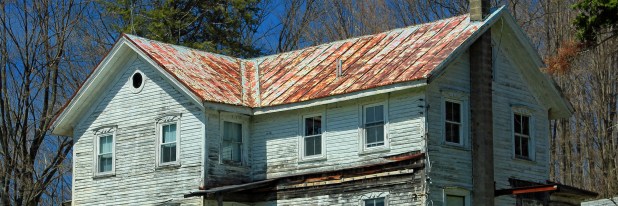
Start by driving through nearby neighborhoods and mobile home parks. Look for vacant, run-down housing or vacant apartment units. Look for un-mown lawns, mail and newspapers piling up, closed curtains, un-watered grass, siding and trim that needs paint, as well as roofs in bad repair. If you are interested in commercial real estate, you can also look for retail and business space that looks like it has not been used for a while. Maybe the blinds are cracked, there is a tarp over the front door, and the windows never have any light in them.

Fixer-Upper_(8676229431)

FOR SALE—For LEASE

“For Sale By Owner” signs are also something to watch for. These are signs that the owner may not be taping into the web market. “For Rent” and “For Lease” signs may also be pointing to owners that really wanted to sell but couldn’t find a buyer. Look for estate sales signs and yard sale signs. Sometimes owners start clearing out their stuff because they are getting ready to sell. At the sale, ask the home owner if they will be selling soon.

Knock On the Door

When you find a home that looks promising, knock on the door. Knock on the neighbor’s door too. If no one answers, ask about what is going on with the property. Leave behind your business card. Write down the addresses and research the property from your computer. Keep a journal of prospects and follow up every month. You can keep an online journal too, photographing the house and making notes to help you remember to follow up.

In the case of commercial business space, the same strategy would apply. Try the door. Knock. Talk to the owners of nearby businesses and find out who owns the building and if they have shared their plans.

One tool that you can make for yourself is a door hangar. It can be something simple that you make yourself with a hole punch and rubber band, or something you more polished that you order form an online printer. It should say something like, “We buy houses. Call 512-555-1212.” If no one answers when you knock, leave one of your door hangars.

If you find a deal, give me a call for a fix-n-flip rehabilitation loan. You can e-mail too.

Pat St. Cin

Patrick@InvestorsLendingSource.com

512-213-2271

Austin, Texas


A Town with a Trail

Fort Worth

A good real estate property hunter follows the flow of people. And, like the birds that love the water, people too are flocking to the rivers and bayous of Texas. As they follow the new jobs and other opportunities opening up in Texas, they are especially drawn to the waterways and trails that offer walking, biking, boating, and horseback riding. I think of trails as places of freedom, where one can move about, rehabilitate, breathe fresh air, see new things, and even talk with a cousin as you walk along.

Young professionals and families who have lived in the really big cities like New York and Los Angeles are seeing Texas trail towns as good places to call home. According to an article in the wsj by Alina Dizik, they are buying homes in Fort Worth to get better prices on larger luxury homes, walkable neighborhoods, and a yard for their dog. In Fort Worth, they also can get access to the Trinity River Trail and proximity to the city’s cultural district if they so choose.

nashua_river_rail_trail_3

The Trinity Trails System

The Trinity Trails are a system of trails along or near the Trinity River in Fort Worth. There are over 40 miles of trails along the river and its tributaries. The trail network connects with 21 parks, the Fort Worth Botanical Garden, The Japanese Garden, Log Cabin Village, the Fort Worth Zoo, the historic Stockyards, and downtown. You could disappear for a whole weekend on that trail and never be bored.

The Trinity Trail also offers 17 trailheads for picnics and rest stops, five boat launches for canoes, kayaks, and sculls, a water-ski slalom course and fishing in a number of spots. For a map of the trail, visit

http://www.trwd.com/wp-content/uploads/trinity-river-trail-map.pdf

Fruitful Hunting

You might want to consider looking for flip-n-fix properties in the areas along this trail. Although the Wall Street Journal article was talking mostly about luxury homes, it did mention a rehab that the owner undertook themselves. Your hunt for the perfect, or at least interesting and profitable, fix-n-flip property might bear fruit in this area.

If you find a deal, give me a call for a quick gap loan to secure the property or for a full fix-n-flip rehabilitation loan. You can e-mail too. I can help with loans in the DFW metro area.

Pat St. Cin

Patrick@InvestorsLendingSource.com

512-213-2271

Austin, Texas

References:

Dizik, A. As Homebuyers Flock in, Fort Worth Embraces its Cowtown Reputation. WSJ, January 17, 2019.

Nashua River Rail Trail 3 photo by Photo by White, Michael A. at English Wikipedia [Public domain], from Wikimedia Commons.

In-a-Hurry Loan to Cover the Gap

There are several reasons why a fix-n-flip investor might want to secure a fast loan to cover a gap. A gap loan, as the name implies, is a loan that bridges a span of time. It helps you gain control of a property quickly even if you are still scrambling to get all your paperwork done for a full rehabilitation loan.

A Buyer in a Hurry
At some time or other, you might face a seller in a hurry. One situation that puts a seller in a hurry is foreclosure. Many property owners in this situation are in denial so they wait until the last week or so, or even days, before the foreclosure sale to act on saving their credit. To save their credit, they must pay the bank all they owe on the mortgage right now. The house might actually be worth much more than what they owe if they have been paying on the loan a long time or put a large payment down on it. But, a foreclosure on their record will ruin their credit. So, for them, it is better to sell at a discount and survive to buy another house another day.

In this scenario, an owner in foreclosure has agreed to sell the property to you at a steep discount, but they need to close the deal quickly. You, the investor, want to buy this property and you make an offer. However, the competition is extremely stiff, and another investor is sitting in the wings waiting to obtain the property. Your offer locks up control of the property temporarily. You need to move quickly to secure a loan. Normally the loan process takes a minimum of 7 working days and typically takes 10-15 working days.

A Nonrefundable Deposit

Another reason you might need funding in a hurry is that you have stumbled upon a wholesale purchase with a tight deadline to close, perhaps 2 to 5 days. The property is ideal for your purposes and you want to make an offer. However, if you don’t get the deal closed by the deadline, you will lose the nonrefundable deposit you are required to put down and control of the property you are seeking.


mind_the_gap

Getting Control of the Property

Here is where obtaining a gap loan is useful. A gap loan allows you to purchase the property as is while you are in the process of obtaining a rehab loan. The gap loan can be secured in 2 to 3 days typically. Your strategy is to obtain control of the property through this gap loan, begin paperwork to refinance the loan immediately and eventually complete the rehab and offer the property for sale.

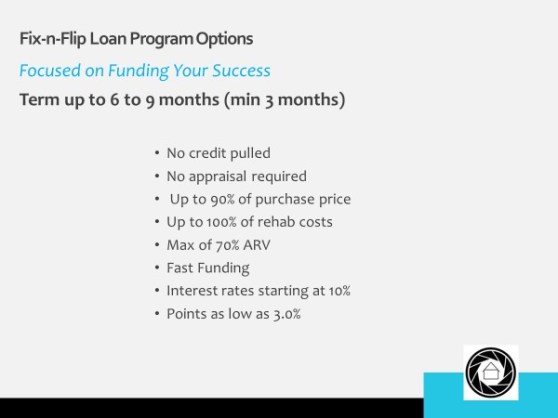
REI Capital Resources has funds available for fix-n-flip loans with terms up to 6 to 9 months with a minimum of 3 months.

Fix-n-Flip Option 2

E-mail or call for more information on minimum and maximum loan amounts, interest rates, terms, and fees for specific project. I can help you with first liens only and these loans are limited to the Austin, DFW, Houston, and San Antonio Metro areas.

Pat St.Cin

Patrick@reicapital.cash

512-213-2271

Austin, Texas

A Tangible Asset

A tangible asset is one that is capable of being appraised at a particular value. It can be touched. It can be identified. It is real. There is no guesswork about it. Hard money loans are based on the value of the asset or property used for collateral.

The stock market is impossible to control. If you read Investopedia or the Wall Street Journal, you know already that It will soar and dive and stall. However, it is just one option for an investment. Real estate is another choice you can make. Real estate would put some diversity into your investment portfolio. However, it takes a little more hands-on work and patience. In the stock market, all you do is decide how much you want to invest and put your money down and sell when you are ready.

In real estate, you have more choices to make. You decide how much time you want to invest as well as how much money. You should of course do the research upfront yourself and find a great real estate agent to work with, but you can choose the location of the property, pick the quality of the house or apartment complex, do the remodel yourself if you have the skills, find the occupants for a rental through internet advertising, and/or manage the rental yourself by collecting rents and providing landlord services.

A rental produces cash flow even in an economic downturn. In fact, in economic downturns, it might give you more income as people may have to rent instead of buy and occupancy rises. A rental property also builds equity. On the other hand, real estate takes longer to sell than stock and income requires occupants. There are also taxes, insurance, and utilities to pay whether the property is occupied or not.

If you are looking at buying real estate as an investment option, to add diversity to your basket of investment eggs, you need to do your due diligence assessments and be ready for competition. It would be a good idea to get prequalified for a loan so you can have the money on hand fast if you find a property you want to invest in.


img_00003745

Ask yourself:

How much money do I need?

How much collateral can I offer a lender?

How much will the repairs cost?

How long will the repairs take?

Add a 15 % cushion

As a broker, I would be happy to talk over the options with you and can help you find a funding source for a fee. I give advice, do the paperwork, and make the phones calls involved in the transaction. I have contacts and experience in bringing lenders and borrowers together. I’ll help you find the best rates and pass the completed loan package on the lender.

I would love to give you a hand.

Follow this link for a quick prequalification form:

http://investorslendingsource.com/pre-qualification-program

Or, please call or e-mail.

Pat St. Cin

Patrick@InvestorsLendingSource.com

512-213-2271

Austin, Texas

No Hammer Renting

I was reading an article by Ryan Dezember in the wsj about house renting companies that are starting to see a benefit in buying suburban houses to rent rather than remodeling older homes in the city. The article summarized some interesting points and strategies that are worth considering.

The rationale for buying a new house to rent out arises out of evolving situations that home buyers are facing. When housing prices go up in the suburbs, young families cannot find homes at entry-level prices that they can afford. Many of them are burdened with student debt and don’t have the credit standing to buy the higher priced new homes. So, they are willing to rent to make sure their kids get to go to good schools and live in safe neighborhoods.

Steady Income

Renting houses (old ones or new ones) is a promising investment for those who want a steady income instead of a big single payoff. New single-family homes, versus older ones, can be expected to attractive to renters, stay occupied, and provide steady income.

There seems to be two ways to make this investment work: 1. Buy a new house and rent it out yourself, or (2) buy a new house, find occupants for it, and then sell them to a big housing rental company. According to the wsj article, there are quite a few rental home companies starting to look at buying rental houses in the suburbs.

Buying new has benefits:

  • Save on sales commissions,
  • Save on remodeling costs,
  • Charge more rent for a new home,
  • Outfit the house with the preferred fixtures to rent them faster, and
  • Save on maintenance costs for 10 years or so

Since this idea is starting to get around, getting the money quickly so you can squeeze out the competition is something that I can help you with. For rental properties, I offer loans at low interest rates, for terms of 3 to 7 years, with low closing costs, quick closings (15-20) days, and a loan that is based on the asset rather than on your personal credit record so there is less personal paperwork to do.

So, talk to a builder near you who is willing to sell cheap to clear the books at the end of the fiscal year and find occupants, and prepare for a steady income for years to come.

For a quick pre qualification application, follow this link: http://investorslendingsource.com/pre-qualification-program

I would be pleased to have you call or e-mail too.

confused-muddled-illogical-disoriented.jpg

Pat St. Cin

Patrick@InvestorsLendingSource.com

512-213-2271

Austin, Texas

Photo by Pixabay on Pexels.com


The Perfect Fit

Quick Closings to Beat the Competition

As competition for houses to fix-n-flip tightens, the ability to get money quickly based on the value of the asset is an important tool in your box.

Private lenders, not banks, are willing to help you fund your project based on the value of the property you are looking at remodeling and the value of the project when it is complete. They have money to lend and you need money quickly. A perfect fit is out there.

bench hands field park

As a broker, it is my job to bring you together, to make the transaction easy for both the borrower and the lender. This means minimal paperwork, no credit check, no appraisal, and a quick closing. Together, we can get a quick closing because the loan is based on the property, a known entity of solid value, and because the loan is for a short duration.

There is a market out there for fixed up homes. As the price of new houses go up, there are fewer and fewer available at a price a young family can afford. Millennials have college debt to pay, but still want their children to go to good schools. So, they are looking for homes in the suburbs, older homes that have been remodeled.

So if you love to fix up older homes, have your eyes on homes that need some TLC but will be gems when they are cleaned up, updated, and remodeled, give me a call. The competition is stiff for these homes and you will need the money quickly to snap up that property.

I would love to give you a hand.

Follow this link for a quick pre-qualification form: http://investorslendingsource.com/pre-qualification-program

Or, please call or e-mail.

Pat St. Cin

Patrick@InvestorsLendingSource.com

512-213-2271

Austin, Texas


Photo by Pixabay on Pexels.com

A Cursive Business

I’m not exactly sure when they took cursive writing out of the elementary school curriculum, but it truly was a loss. So many grandparents were in for a shock when their grandkids could not read their birthday cards, and with the passage of time, even the parents of the children cannot read the cards to them.

Well thankfully, cursive hand writing is making a comeback according to a blog on Medium by Jon Marcus. It is being required once again in elementary schools in North Carolina and Arizona, and he tells us about the Sip & Script, a 3-year old company that organizes a 90-min class near Harvard University where an assortment of people 20 to 50 years old gather to sip flavored water and practice their penmanship.

When I read this blog, I thought “What a novel idea for a business.” The Sip and Script is an example of the type of small business that might move into a newly remodeled office building, one of those former utility buildings or warehouses that have been remodeled and turned into retail or office rental space.

I know a banker and his partner who recently purchased and remodeled a building that was once a doctor’s office. They turned the space into 7 small suites, a conference room and a kitchenette. They advertised for occupants with an ad looking for entrepreneurs with ideas for a business who needed some space in which to grow and offered seed loans for the startups.  His motive is multifaceted, to rebuild the downtown business section of the town he lives in and to put some of his money to work for his community. Like all good investors, the partners are also interested in putting their money to work to make more money.

Their building is now fully occupied by a not-for-profit, a small publisher, a community newspaper, a pair of accountants, and a therapeutic masseuse. As the businesses move in and get underway, they will pay rent and enliven an unused downtown building and eventually be attractive to investors interested in buying office space as rental property.

Like so many entrepreneurs, the owners of the Sip and Script cursive writing business saw a need and put their skills to use fulfilling that need. That is what it takes to thrive.

As for cursive writing — it takes practice.

Drop me a line if you are interested in investing in a commercial fix-n-flip project in business rental space. Perhaps you are the one that wants to loan the money or maybe you have a building in mind that you want to remodel and need cash for that purpose. Either way, I can be reached at

Patrick@InvestorsLendingSource.com

512-213-2271

Austin, Texas

To read more about the cursive revival visit Marcus’ blog at https://medium.com/

BE AWARE: Part 2

What does a Horny Toad Have to Do with It?

In Part I of Be Aware, I discussed performing a due diligence assessment with regards to past and present environmental hazards in the vicinity of the property you may be considering. In this part, I want to point out another aspect of the due diligence research you do that revolves around the plants, animals, and habitats that may be on or near the property you are considering making a loan on, developing, or remodeling. The animals and plants that inhabit that property need to be accounted for, not only because we value them, but because their presence may affect the dollars we need to spend on a project. As I have said before, hard money loans are offered based on the value of the property. So, you want to look carefully at anything that affects the property value now and in the future.

In Texas

As a landowner, you will be obliged by law to work around habitat or vegetative species that are considered endangered. According to the Texas Parks and Wildlife website, endangered species are plants or animals that will likely become extinct within the foreseeable future. Threatened means that a species may become endangered within the foreseeable future.

In Texas, plants or animals may be protected under the authority of state law and/or under the Federal Endangered Species Act. Examples of federally listed species in north Texas are the black-capped vireo, golden-cheeked warbler, and the Texas poppy mallow. Some of the state listed species are the Texas horned lizard (horny toad) and the Texas kangaroo rat.

1024px-texashornedlizard.jpg

The Texas list deals only with the status of the species within the borders of Texas. The Federal listing means that an animal is in trouble throughout its entire range which may cover several different states. Federal law not only protects the individual animal, but also protects its habitat. While TPWD enforces regulations pertaining to state listed species, the U.S. Fish and Wildlife Service enforces regulations pertaining to federally listed species under the Endangered Species Act.

Real Estate as Habitat

In the business of real estate, habitat is the concern. Loss and/or fragmentation of habitat is the number one cause for species declines in Texas. For example, the black-footed ferret is one of the rarest mammals in North America, yet it inhabited prairie dog towns in North Texas as recently as 1963. While prairie dog towns still exist, they are too small and too few in number to support a population of ferrets.

To sum it up, just as you would review the local area of your planned real estate transaction for hazardous concerns that will affect the property, you need to research the animals and plants that live on the property and their habitats that might be nearby.

Don’t forget to look for wetlands and ponds when you walk around the property or when you look at the topographical maps. Working around wetland and rivers requires special permits and special protective construction measures that need to be worked into the cost of the construction or remodeling projects.

A County by County List

Visit the Texas Parks and Wildlife website for a county by county list of endangered and protected species in the area you are planning to work in. Each county’s list can be downloaded onto an Excel Spreadsheet. See https://tpwd.texas.gov/gis/rtest

wildlife_districts_148

The Texas Parks and Wildlife Department also offers private landowner tools for things like habitat conservation plans, safe harbor agreements, candidate conservation agreements, and landowner incentive programs at

https://tpwd.texas.gov/huntwild/wild/wildlife_diversity/nongame/listed-species/landowner-tools.phtml

Remember. I’m not giving legal advice, just pointing out areas you should research  before you buy a property or loan money and put your name on a deed. Be sure to be aware of the physical reality of the property itself.  Look at it in real life and on the internet.

Patrick@InvestorsLendingSource.com

512-213-2271

Austin, Texas

References

Texas Parks and Wildlife website at https://tpwd.texas.gov/

Photo Ben Goodwyn [GFDL (http://www.gnu.org/copyleft/fdl.html), CC-BY-SA-3.0 (http://creativecommons.org/licenses/by-sa/3.0/) or CC BY 2.5 (https://creativecommons.org/licenses/by/2.5)%5D, from Wikimedia Commons

BE AWARE: Part 1

When making a commercial real estate transaction, whether as buyer, borrower, or lender, you really need to do your research into the property’s current and past uses and potential environmental issues. Remember hard money loans are offered based on the value of the property. So, you want to look carefully at anything that affects the property value now and in the future.

This type of look around and document is called a “due diligence” assessment. As the purchaser or mortgage holder, you want to compile information and investigate the property you are interested in buying to make sure you are aware of any issues with the property that will affect your financial outcome. And, you want to do this before you buy.

Just as you would look for issues with the property’s title, such as judgments and liens, on the financial side; and on behalf of your future renters and buyers, check out the safety of the neighborhood at night; and again on their behalf, inspect the road for gargantuan pot holes that might eat their Prias or VWs; you also want to look at the property itself and at its current and past uses for your own sake to make sure you are not inheriting any costly environmental issues that you are not prepared for.

Cleanup Will Cost You

Environmental contamination, such as asbestos, PCB’s, radon, leaking underground storage tanks, mold, mildew, and lead-based paints on a property can cause the cost of “fixing” the property to explode so you want to be aware of these situations and prepare for them or walk away.

The official name for the investigation into environmental hazards and liabilities on a site is called a phase I environmental assessment. It determines in a methodical way if there is any environmental contamination or hazards in a building’s region or within the building itself. There are many professional firms out there that do this kind of work and one may have already been done on the property you are thinking about.

Get the History

The environmental site assessment typically addresses the history and current conditions of both the underlying land as well as physical improvements to the property. This assessment would scrutinize the land for soil contamination, the groundwater and surface water for contamination and quality.

It would look at the structure or structures on the property you are buying. Are there abandoned drums of unknown liquids or materials, an unlicensed dumping ground in the woods in back of the house, contaminated water wells nearby, or chemical residues, asbestos, mold, mildew, or other hazardous substances in the basement?

asbestos_fibres.jpg

Abestos (tremolite) silky fibers, photo taken at the Natural History Museum in London by Aram Dulyan, public domain, Wikimedia commons.

Neighboring Properties

The phase I environmental assessment would also evaluate if there are contamination risks on neighboring properties that might affect the value of the property you want to buy. Before you invest in the formal environmental assessment, you might want to do a little sleuthing yourself to see if you want to invest even that far  You can start by performing some visual inspections and record searches yourself.

Walk around the neighborhood and take notes on what is nearby, within a half mile or a mile. Are there hazards or attractions in the vicinity?

Review Federal, State, Local, and Tribal records of the property using its GPS coordinates and review the records for properties up to a mile away.

Interview people who are knowledgeable about the property, for example, past owners, current owners, managers, tenants, neighbors.

Fires, Floods, Mud, and Spills

Examine municipal or county planning files to check for prior usage and permits granted and conduct file searches with public agencies, such as the fire department, state water board, county health department. Ask yourself, has a previous building on the site burned down? Why?

Examine historical and aerial photos for previous and current structures in the vicinity, like an old rail yard, military base, or gas station. It is a good idea and sometimes even fun to look at photos back to a time when there was only bare ground at the site.

txlakeconroemap-e1546539800547.jpg

USGS Topo of Lake Conroe, Tx and vicinity, public domain, Enter a caption

debris_flow_deposit_ladakh_nw_indian_himalaya_2-e1546539957481.jpg

Debris flow in Ladakl, India photo by Dan Hobley, Wikimedia commons.

Examine USGS maps and look at the drainage patterns and topography. We have seen enough in the news lately to make us aware of the dangers of floods, mudslides, fires, and hurricanes.

Where one of these has occurred, it is likely that another will follow sometime down the road. Ask yourself, has this property been flooded before or does it lie in a floodplain or an arroyo?

SBA and HUD

If you are considering lending money on a property, you might want to take into consideration the requirements of the US Small Business Administration’s 504 Fixed Asset Financing Program. It requires specific and often higher due diligence requirements than regular real estate transactions. These assessments are required for certain NAICS codes that associated with the prior business use of the property. There are 58 specific NAICS codes that require Phase I Investigations. These include, but are not limited to: funeral homes, dry cleaners, and gas stations. According to Wikipedia, “The SBA also requires a Phase II Environmental Site Assessment to be performed on any gas station that has been in operation for more than 5 years. The additional cost to perform this assessment cannot be included in the amount requested in the loan and adds significant costs to the borrower.”

The US Department of Housing and Urban Development also requires a Phase I ESA for any condominium under construction that wishes to offer an FHA insured loan to potential buyers.

Remediate or Remodel?

All of this detail is indeed not meant to scare you away from buying real estate to remodel and resell or to remodel and rent. It is only meant to make you aware. It is trendy and even admirable to consider buying old junked up industrial property down by the river or in the mining district and turning it into polished urban housing or shopping pavilions.  If you have ambitions in this area, be sure to look around carefully, do your research, know your costs, and have money ready to remediate the site for you are probably looking at more than a quick remodel.

Disclaimer: I am not providing environmental advice or investment advice.

Patrick@InvestorsLendingSource.com

512-213-2271

Austin, Texas

That Shiny Top Matters

Texture and Color

Even if you don’t cook, but you are interested in successfully fixing and reselling a home as an investment, you need to develop a passion, or at least an interest, in countertops. It seems to be the first thing everyone wants to change in their house or in one they are looking at to buy. Either it is not the right material, it is not the right color, or there is just not enough of it. When it comes to kitchen countertops, the lumber yard has almost as many choices as the cereal isle in the grocery store. There are the different materials themselves; and then beyond that, there are textures and colors that add to the variety.

Dusting and Resale

I wonder why the kitchen counter has become such a focal point. I have my own ideas. First, I think it has to do with cleanliness. Cracks and porous materials can hide bacteria. But I also think it has to do with visual deprivation, a response to the minimalist approach to decorating.

When I was a child, I loved to walk across the unfenced backyards behind my grandparents’ house to the house of a little old lady who lived on the corner. She always let me in to admire her china dog collection. The house was full of more than dogs from all over the world though. It was filled with beautiful objects in ceramic, plaster, iron, wood, glass, and cotton thread. There were figurines of dogs and birds, glass fronted cabinets of vases, crystal, salt cellars, pitchers, and salt and pepper shakers in all shapes and colors. There were heavy door stops shaped like sheep or bears and small dollied tables.

All these wonderful things needed to be dusted. I think that is why the maximal style of furnishing bit the dust; too much dusting.

A Focal Point in Open Concept

Cleaning is much easier when there is less to work around. But, maybe it is because we have become visually deprived by this turn in furnishing fashion that we focus so much attention on the kitchen counter. In many open-concept homes, the kitchen is the center of the living area. The cook wants to be a part of the action, and so the kitchen is exposed. It is not the couple of added on rooms behind a wall off the dining room like it was in my grandma’s day. As the kitchen counter surely is a useful area, the minimalist can take pleasure in its expanse and beauty and still not have “too many things,” just one beautiful thing in the middle of everything to look at and display.

IMG_00003728.jpg

The kitchen counter even made the Wall Street Journal this week. In an article by Robyn A. Friedman on December 26.

“Quartz is All the Rage”

The variety of countertop materials has grown like the number of cereals in the cereal isle at the grocer since 1960. Formica laminate is not the only choice any longer. There is granite, quartz, agate, glass, wood, and for those with a more industrial taste, stainless steel.

“Quartz is all the rage now,” Bill Feinberg of Allied Kitchen and Bath, tells Ms. Friedman. Quartz is an engineered stone that has the look and feel of natural stone and comes in all colors, even white. It resists scratches and stains and never needs to be sealed because it is nonporous. It costs about $50.0 to $100.00 a square foot, including installation.

Granite is found all over the world and comes in many colors with interesting vein patterns. There are many finishes to choose from including, polished, honed, leathered. It is pre-sealed for durability. The price for granite is $50.00 to $75.00 a square foot installed.

Glass is available in many thicknesses and colors. It is nonporous, can be backlit, and display a work of art between its layers. However, it will chip and crack if you drop the canning pressure cooker on it. Glass costs $200.00 to $300.00 a square foot installed.

Agate slabs are a work of art all by themselves and they are semiprecious. Agate can be backlit as well. An agate countertop will cost you $300.00 to $500.00 a square foot installed.

Butcher Block is also available in many kinds of wood from unfinished European Walnut to Ash and Birch. Wood offers warmth and natural beauty. It can be unfinished, oiled, or stained. For the price of a sheet, see your call hardware store.

Topping it Off

Whether your own tastes follows the minimalist or the maximalist anyone in the business of remodeling a house for resale, needs to keep their ear to the ground about what is the latest in kitchen counter fashion. You need to take an interest in the kitchen counter and the choice of and cost of the materials used to top it.

Reference: Friedman, R. A. Countertops Limited Only by Your Budget and Imagination. WSJ December 26, 2018.

Patrick@InvestorsLendingSource.com

512-213-2271

Austin, Texas